Pocket Lines, 2026
Künstlerhaus Bethanien, Berlin, Germany, Curated By: Antje Weitzel
Photos by Ludger Paffrath
Text by Emily Nill
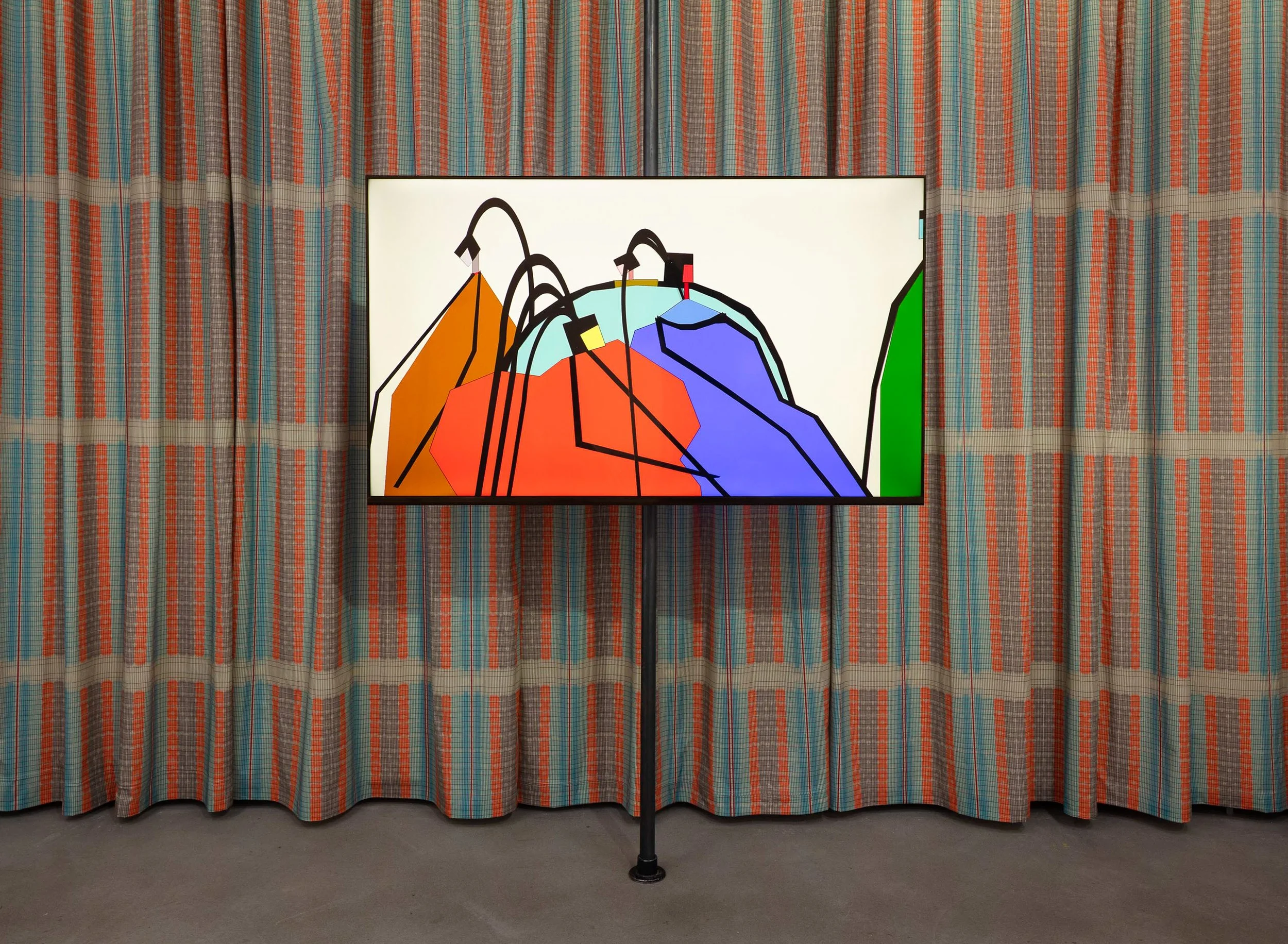
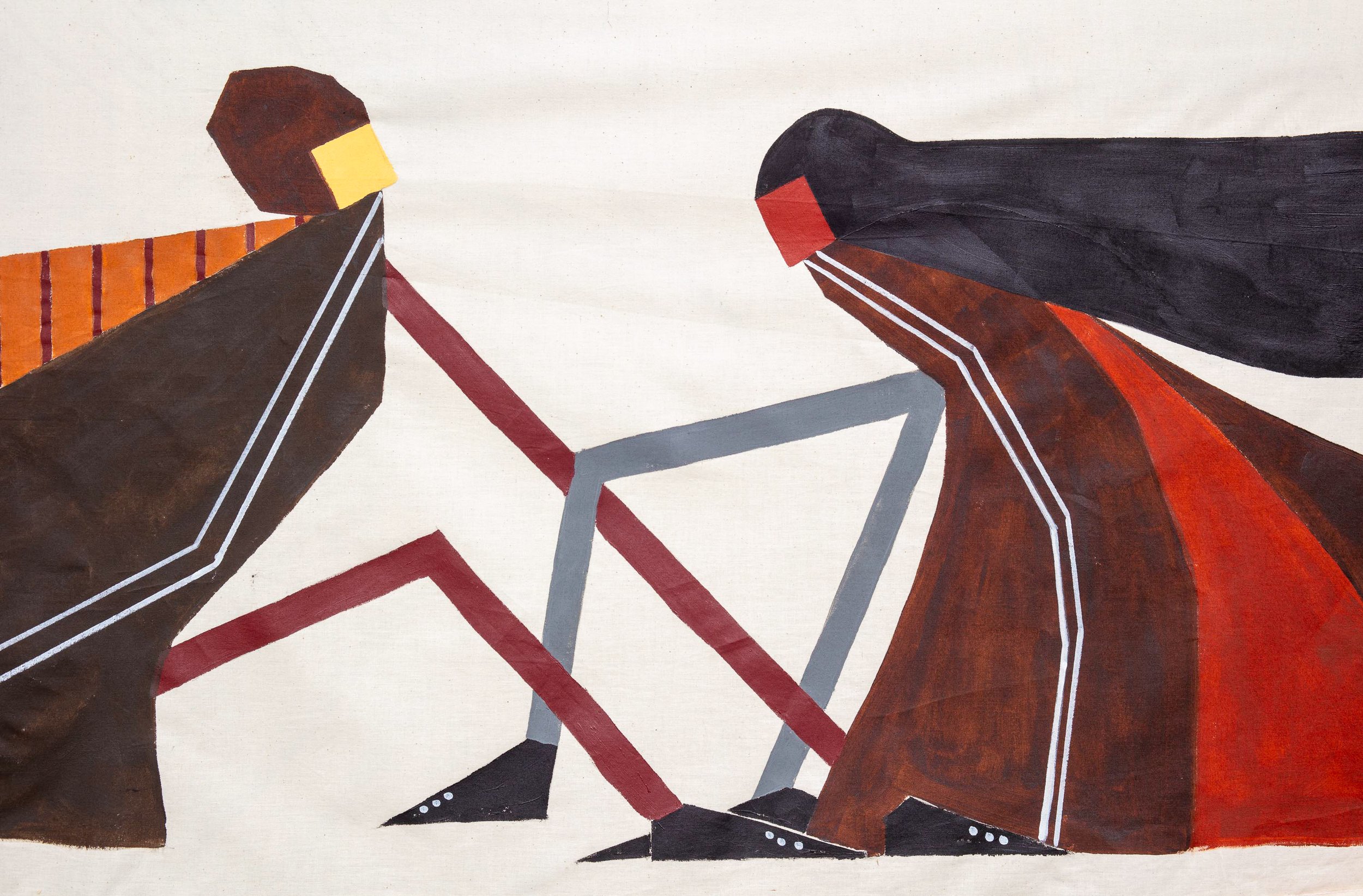
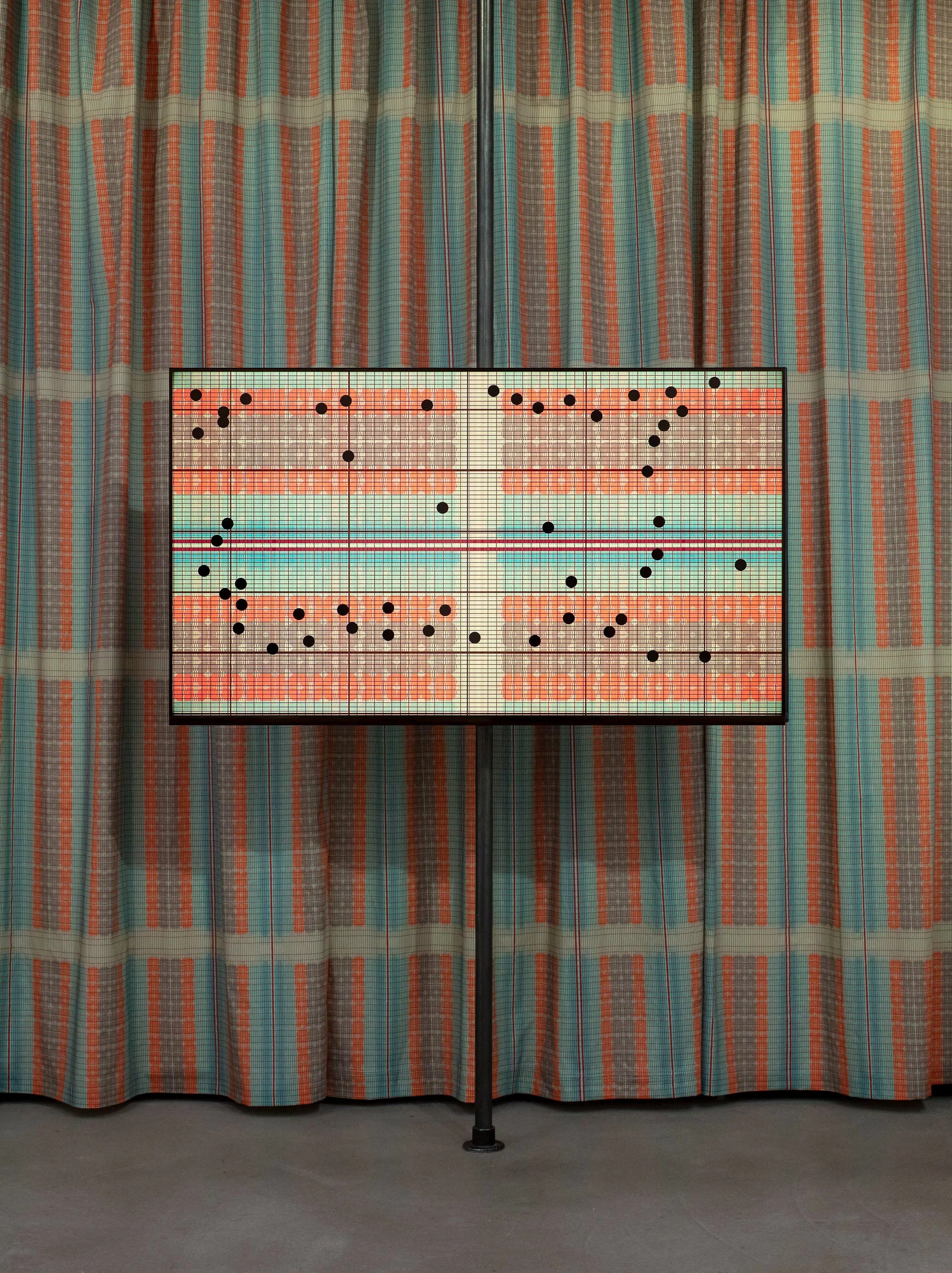
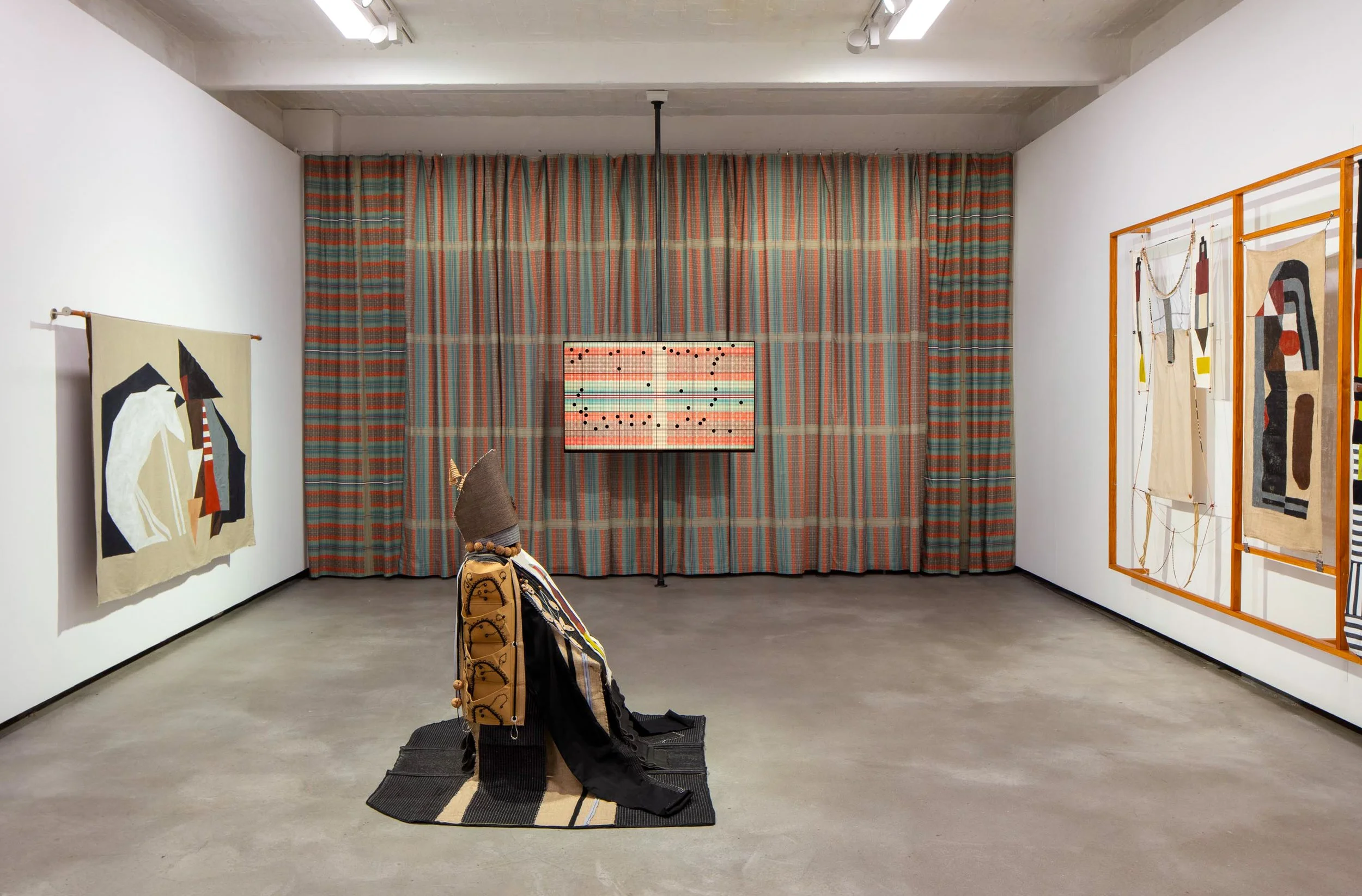
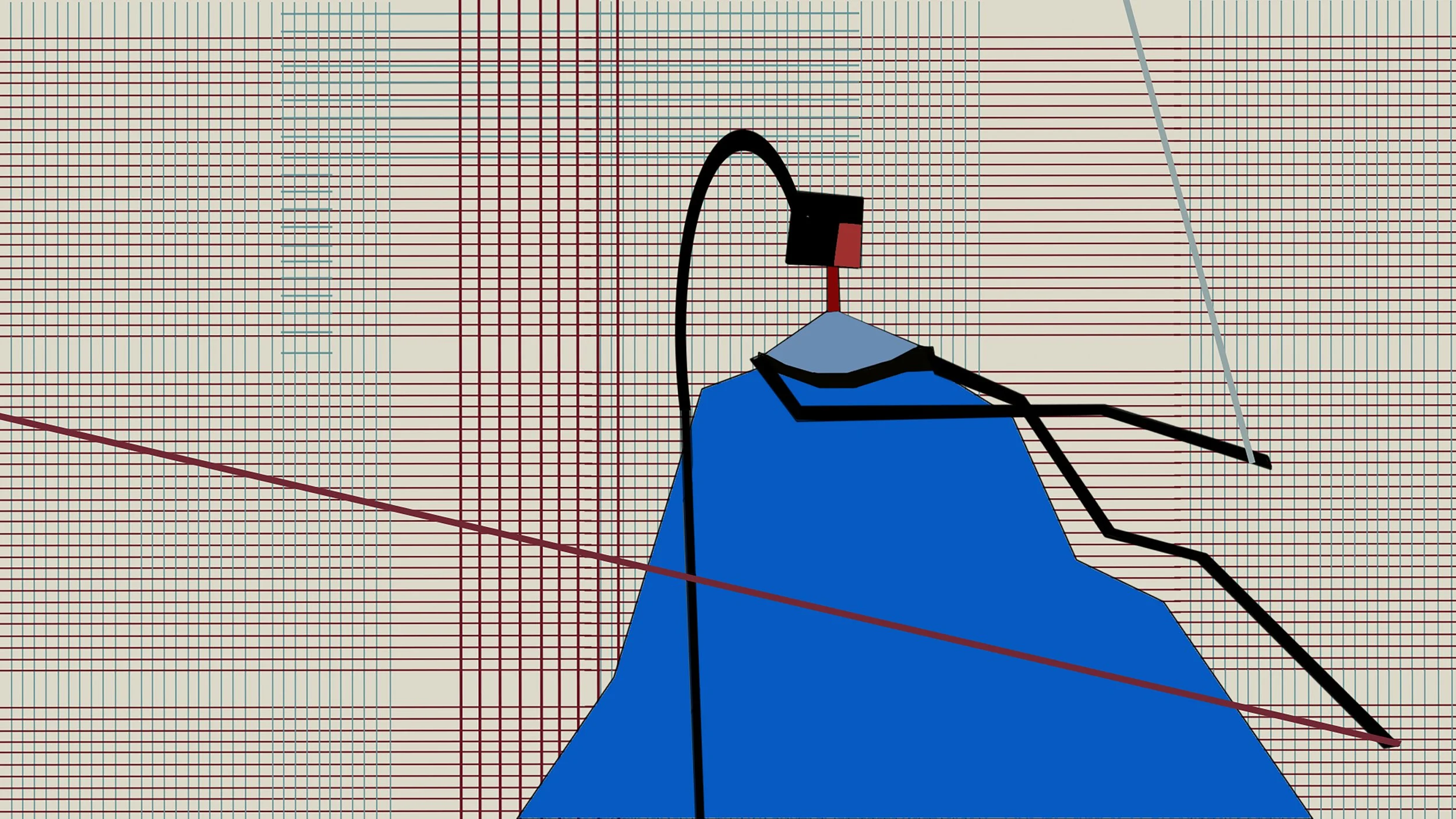
In Ruti de Vries’s animated video The Catchers (2026), several anthropomorphic figures float onto the screen one after the other. Their bodies are assembled from bulging monochromatic shapes reminiscent of tents or rocks, as well as black lines that extendt beyond the edge of the frame as arms and pbraids, suggesting a shared rootedness. They move in sync to a mechanically repetitive composition, which is gradually overlaid by a chorus. The more these bodies occupy the pictorial space, the more clearly their function emerges: they not only structure the colour fields of the composition, but also continually participate in the production of the work. The figures are embedded in a woven structure, a web of blue and red line, which they in turn help to create through their rhythmic movements.
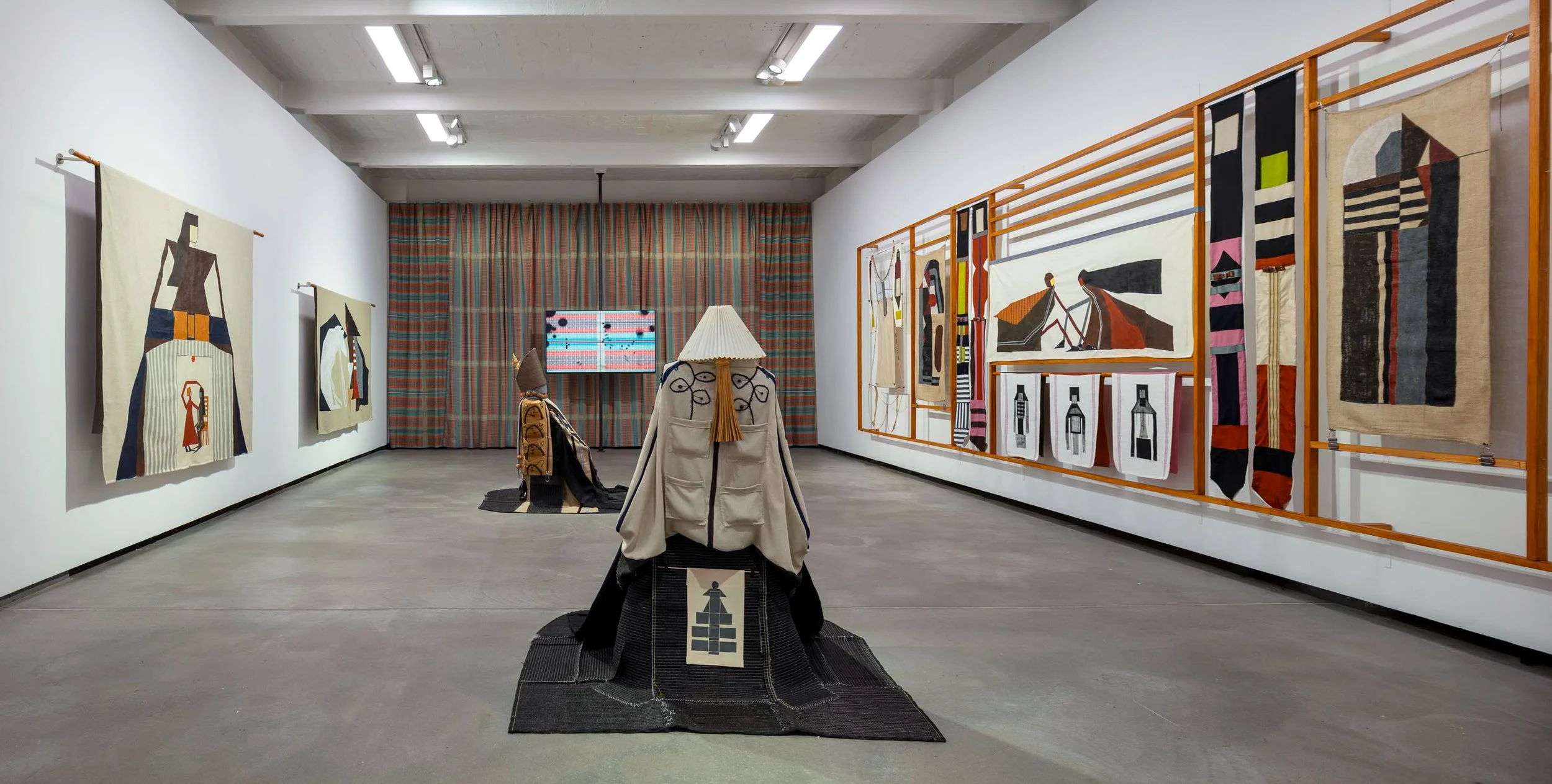
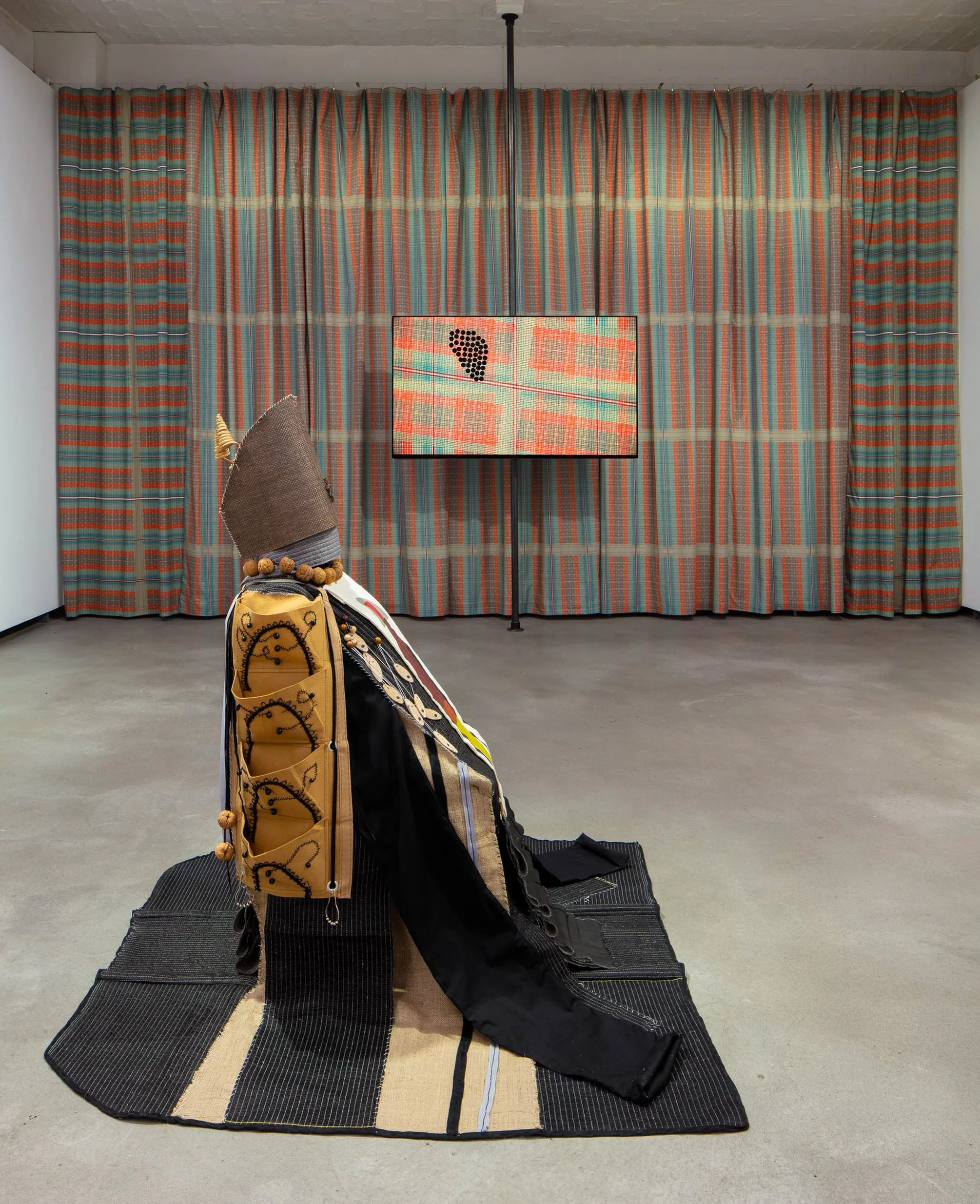
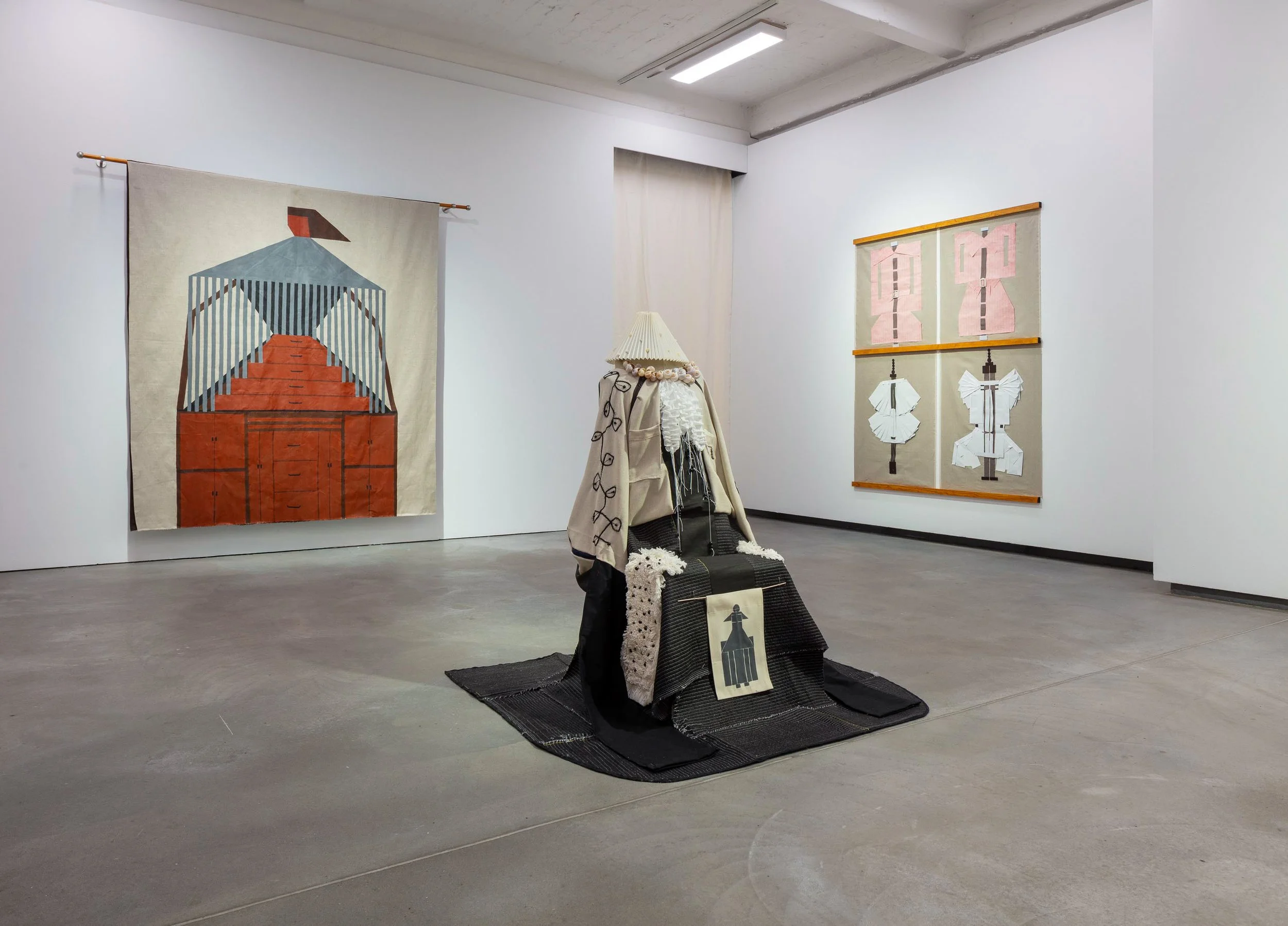
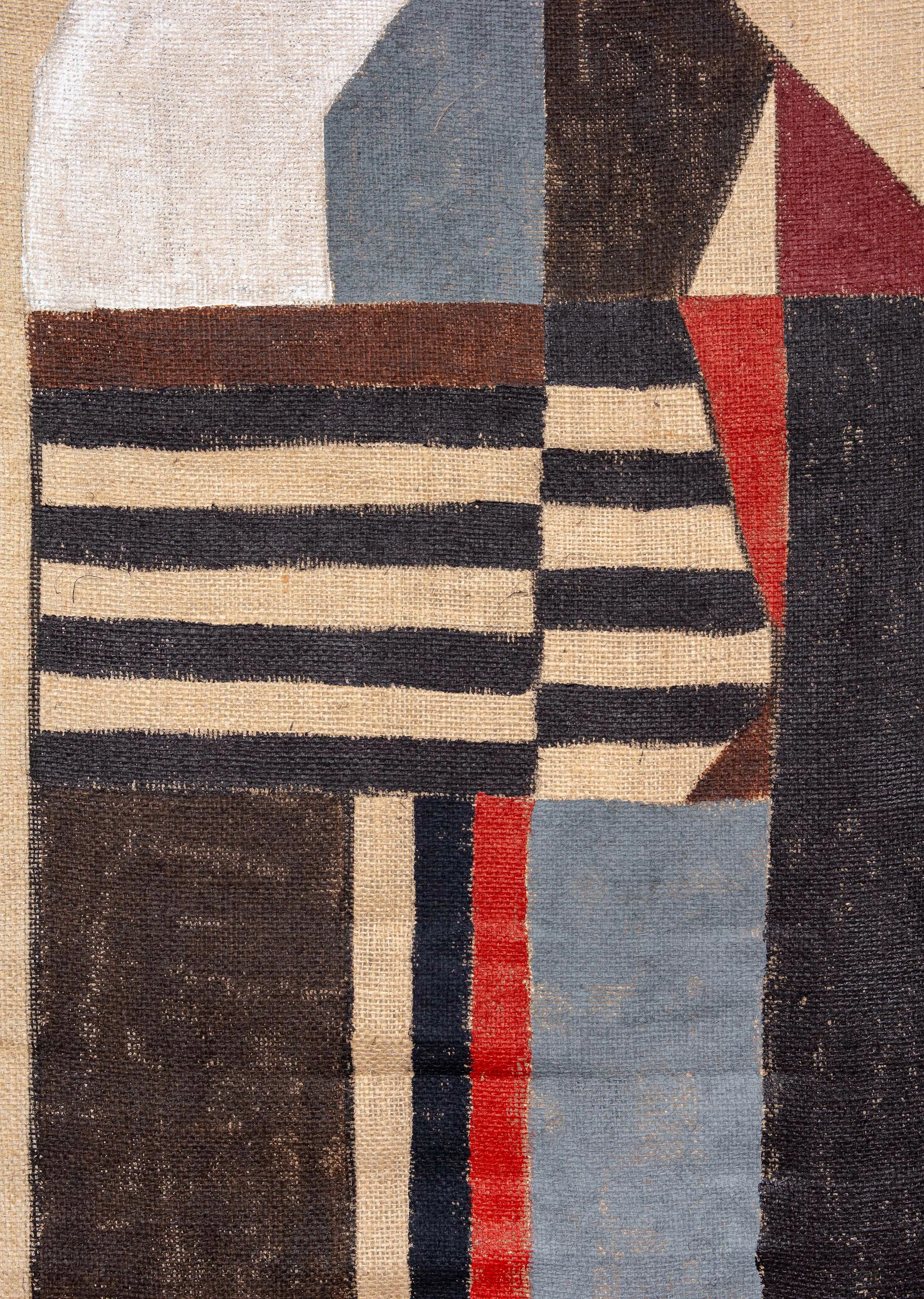
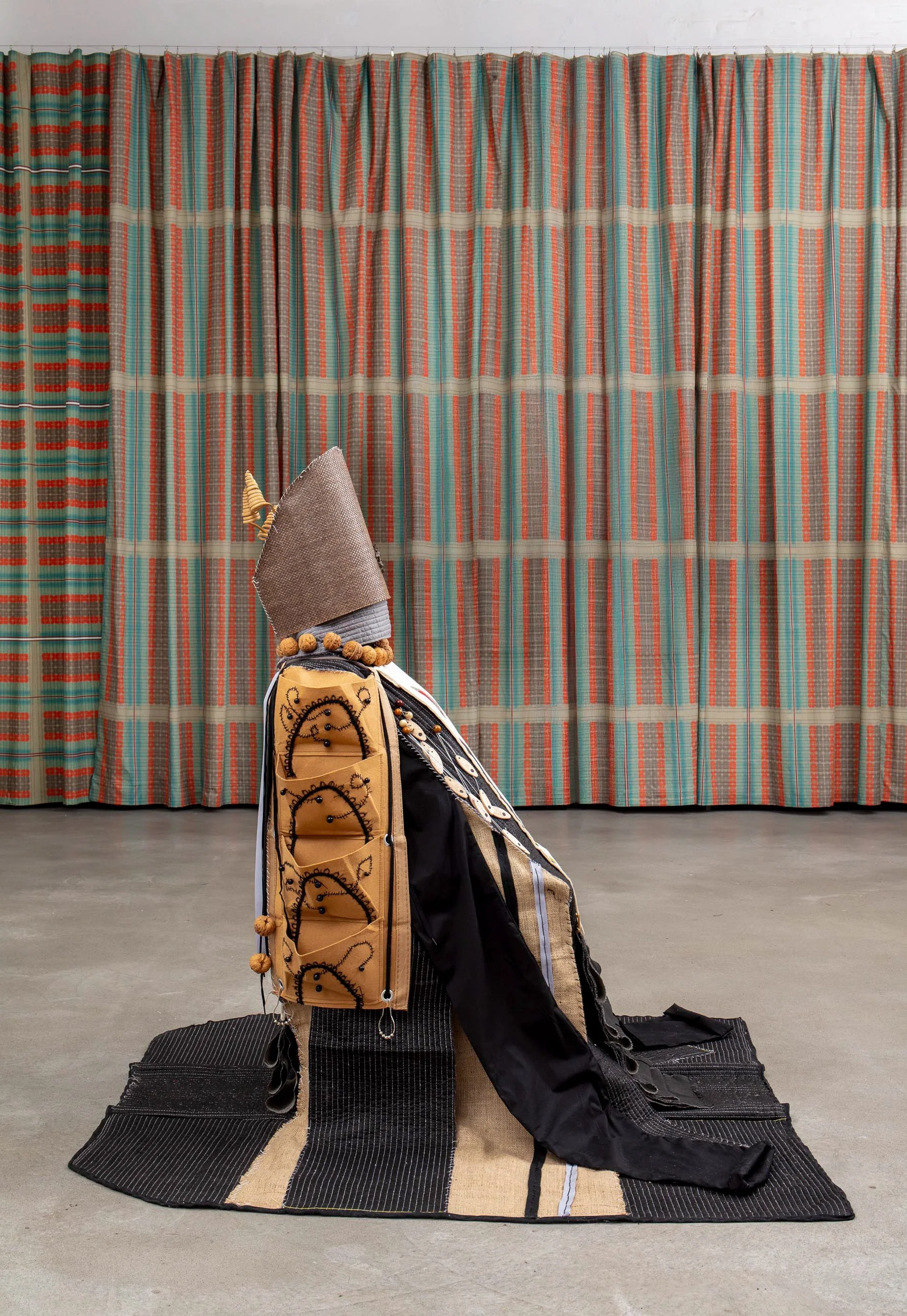
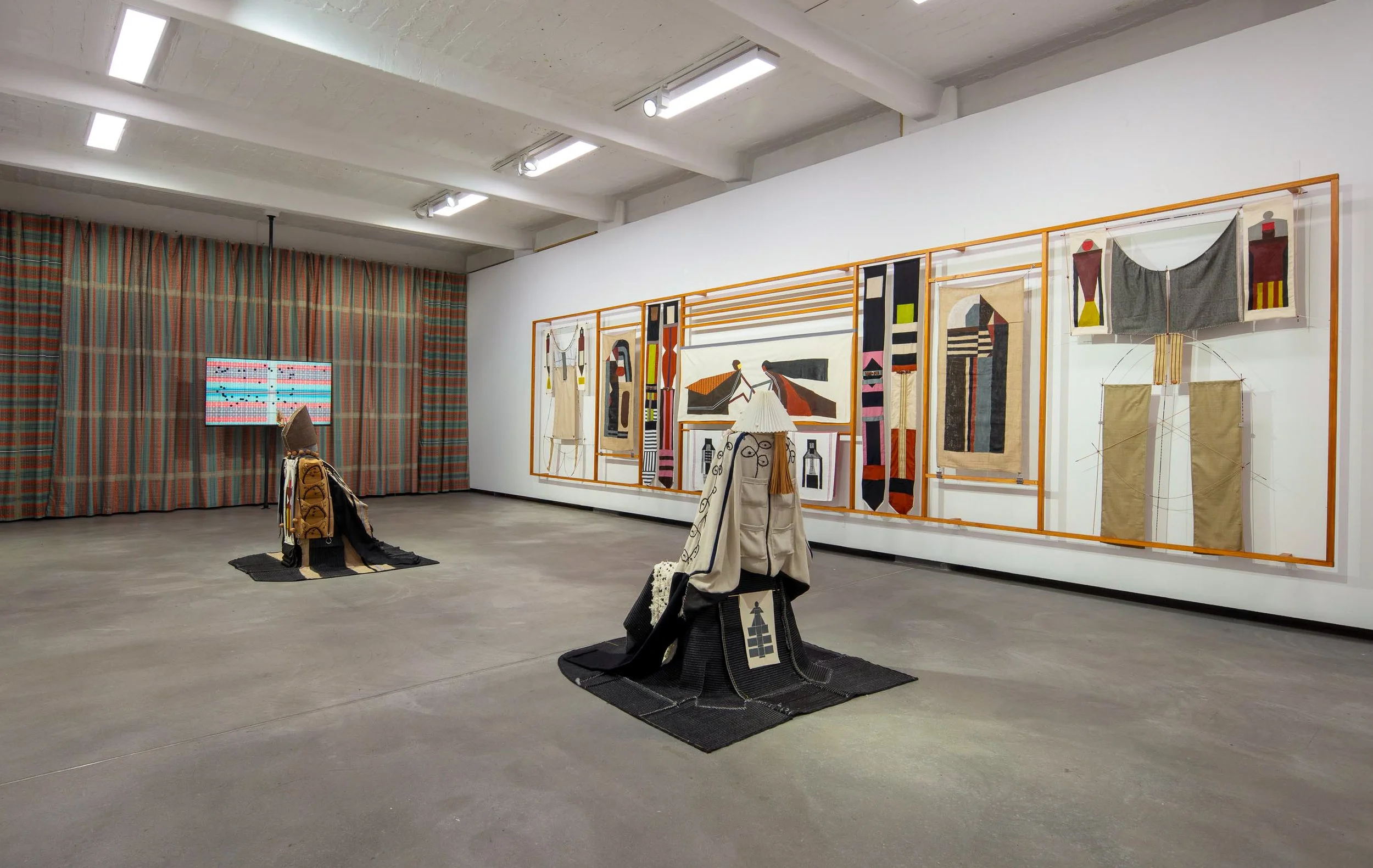
In the exhibition display, the work is framed by a piece of fabric that covers the entire wall and whose pattern recurs in the video. Ruti de Vries developed the colour codes for the textile from photographs she took of Berlin’s urban scenery. A sequence without the labouring figures shows the structure created from red and blue threads, which begins to take on a life of its own, as in a hallucination. Black spheres fly across the screen to the melancholy sounds of a cello, before the rhythm of the weaving figures contains the dramatized mood and production resumes. At the end, the pattern is erased using a digital tool, and the blank screen awaits its renewed animation.
This work encapsulates key aspects of Ruti de Vries’s practice and the exhibition Pocket Lines. Here, artistic practice manifests itself as a relation of production, rhythm and collective action. The creative act is not understood as an isolated gesture, but as a process in which material, bodies and movement are mutually dependent, and communality and openness become the driving force behind the emergence of forms. This process, however, remains necessarily precarious and uncompleted, constantly threatening to dissolve into uncontrollability.
Similarly, a hybrid understanding of fabric emerges, encompassing the repertoire of geometric forms and digital animation as well as the tangible textile resulting from manual labour. At the same time, the work draws attention to the materiality of sound and its potential to make the image appear more vivid. Perhaps one could speak here of a certain vitalistic sensibility that renders media and spatial categories permeable and imagines bodies and labour in an approach towards a less alienated mode of production.
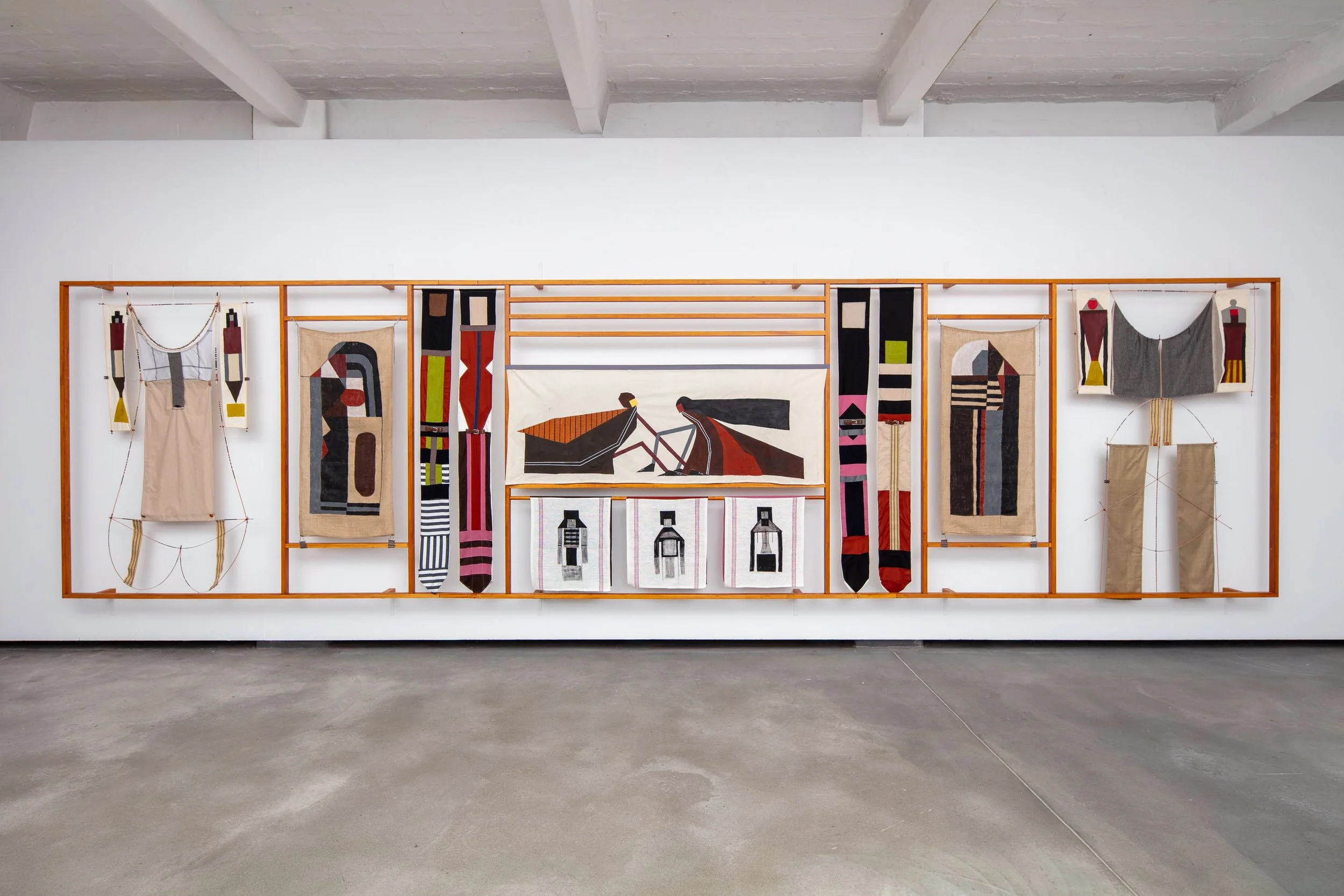
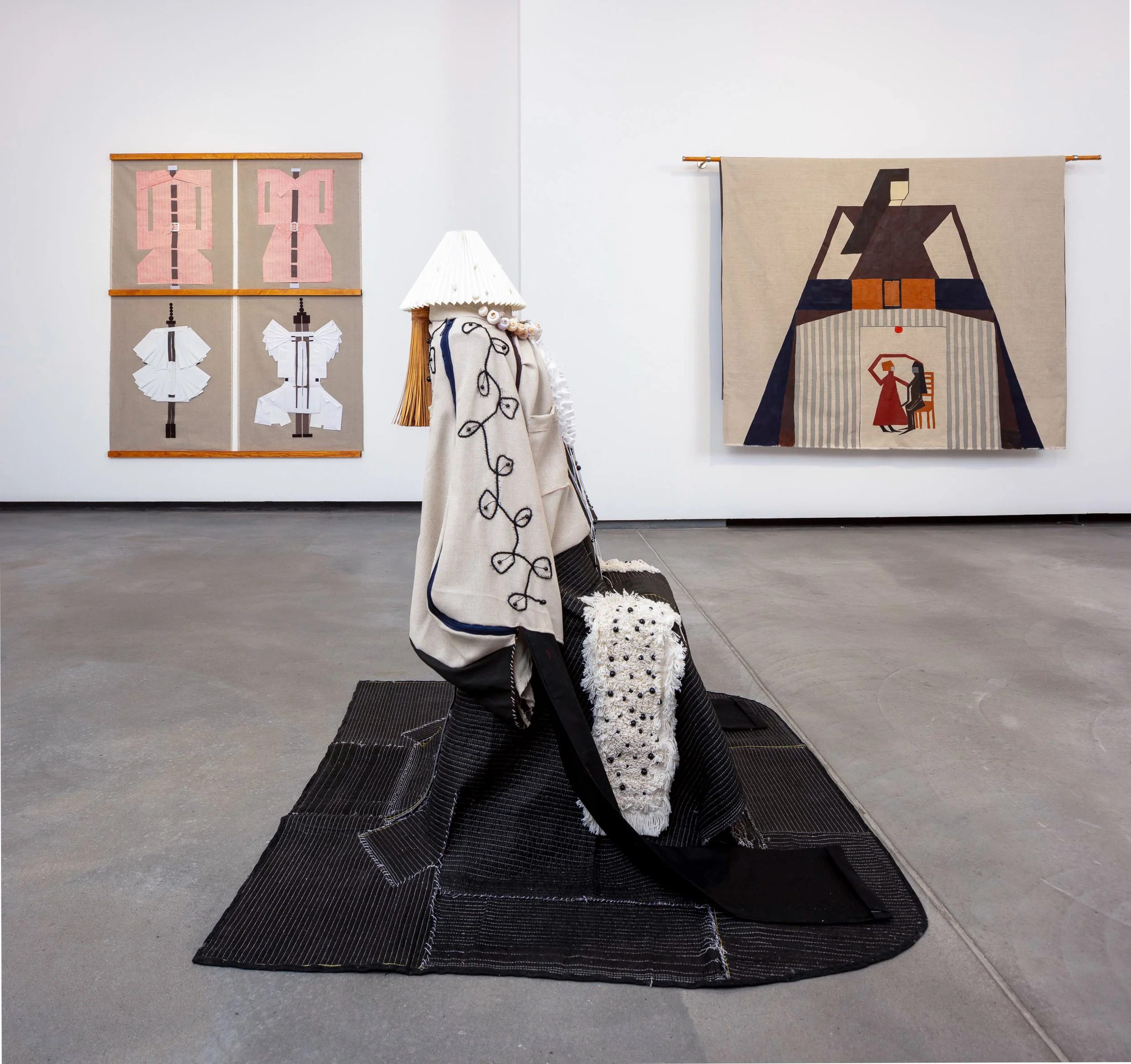
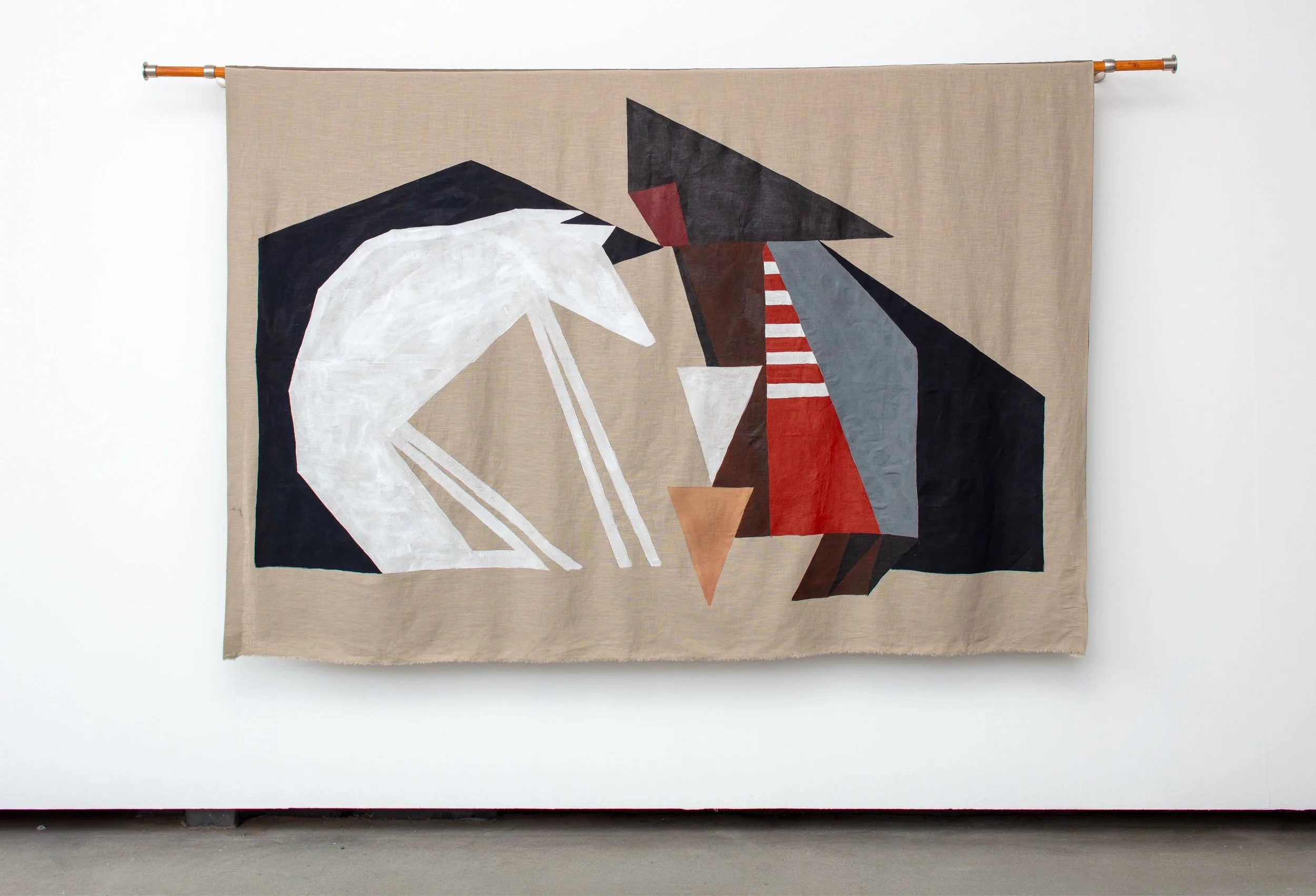
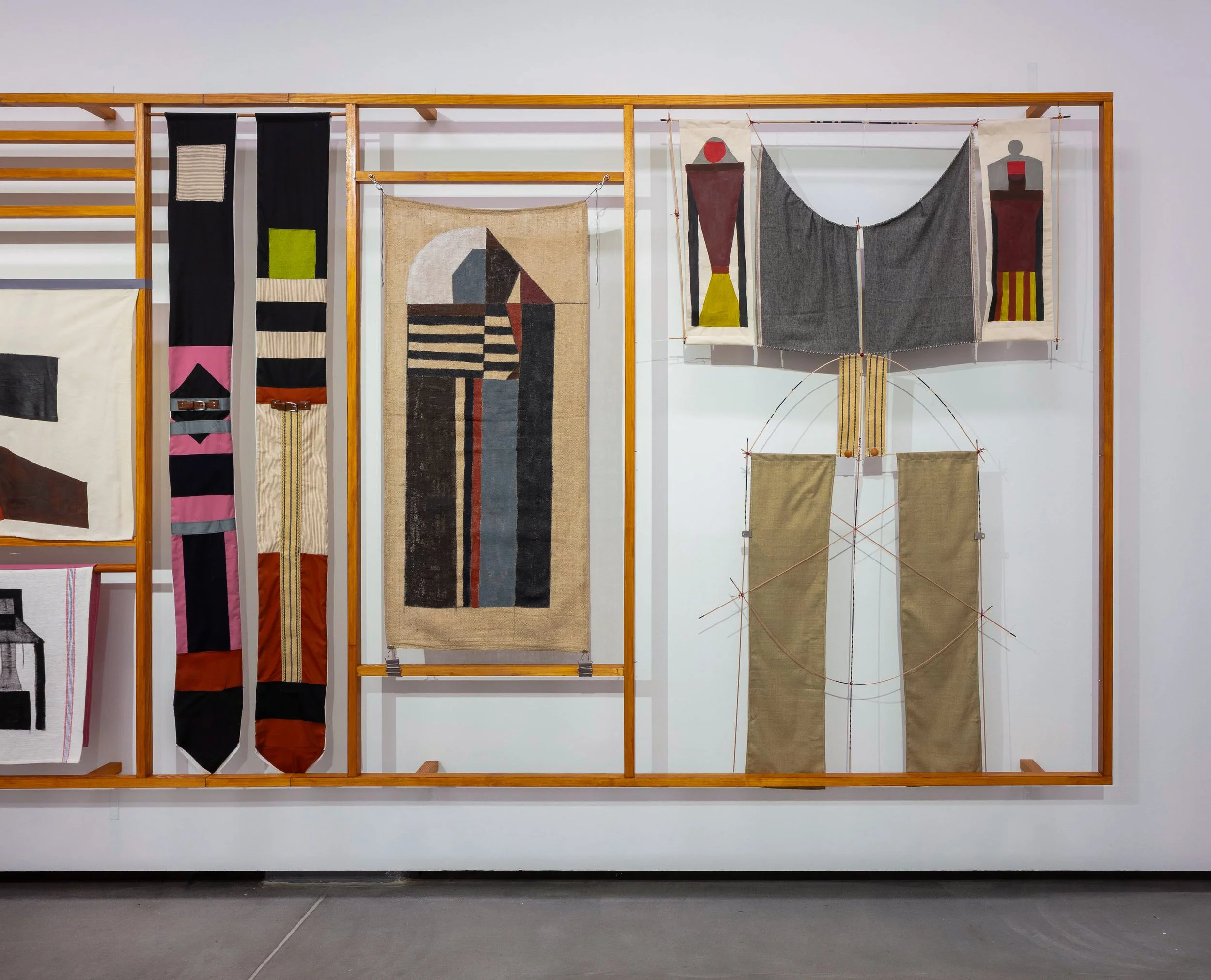
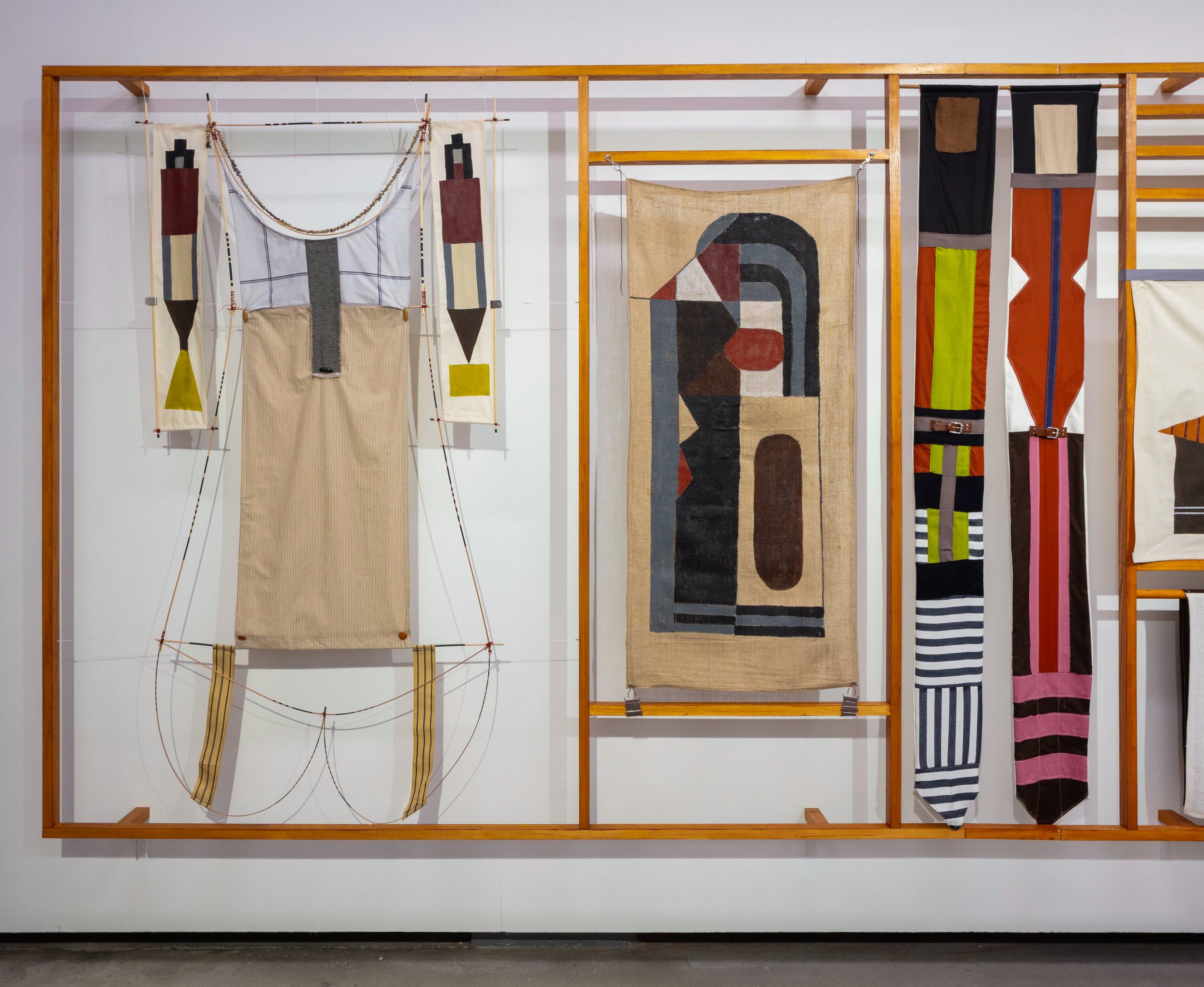
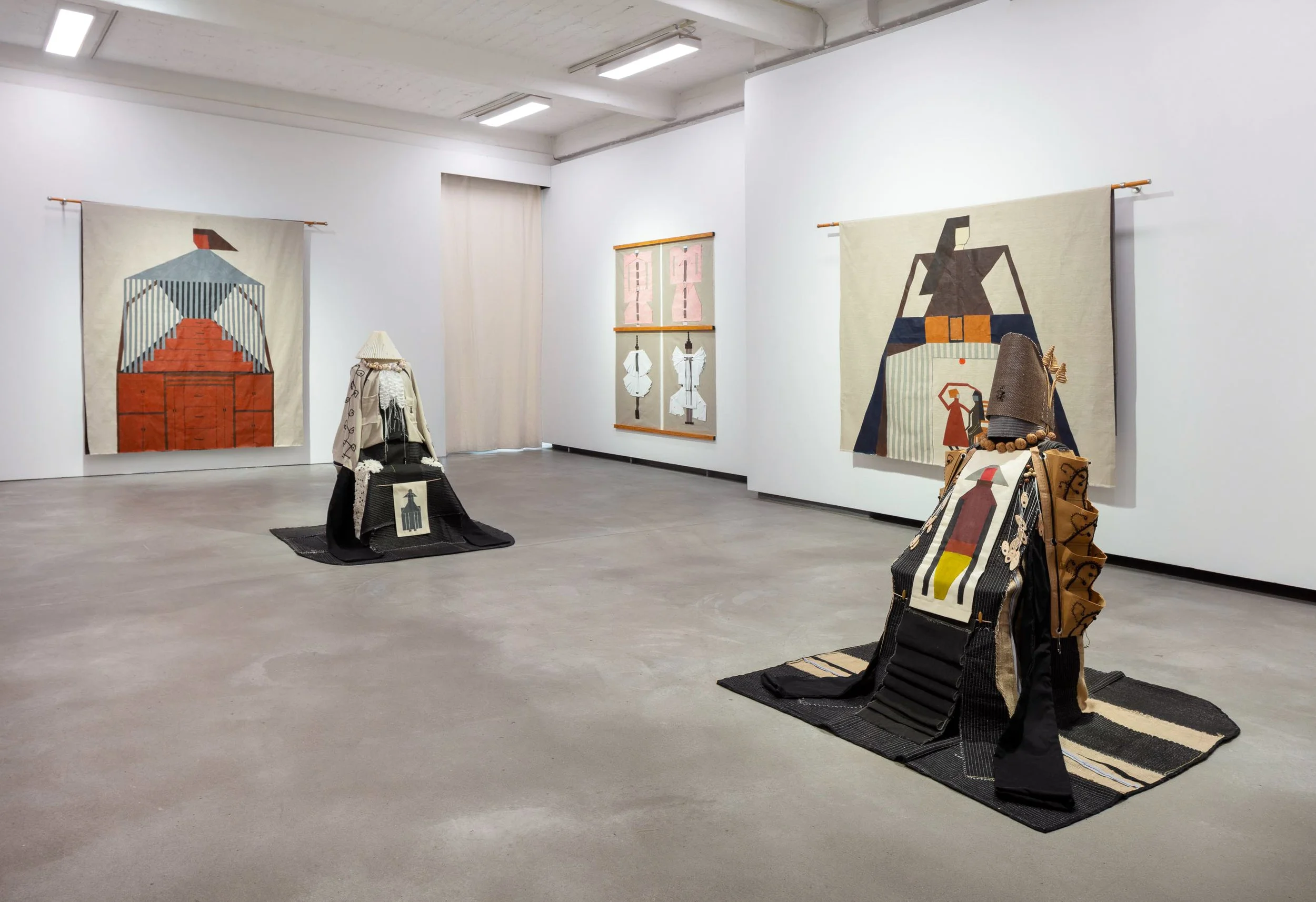
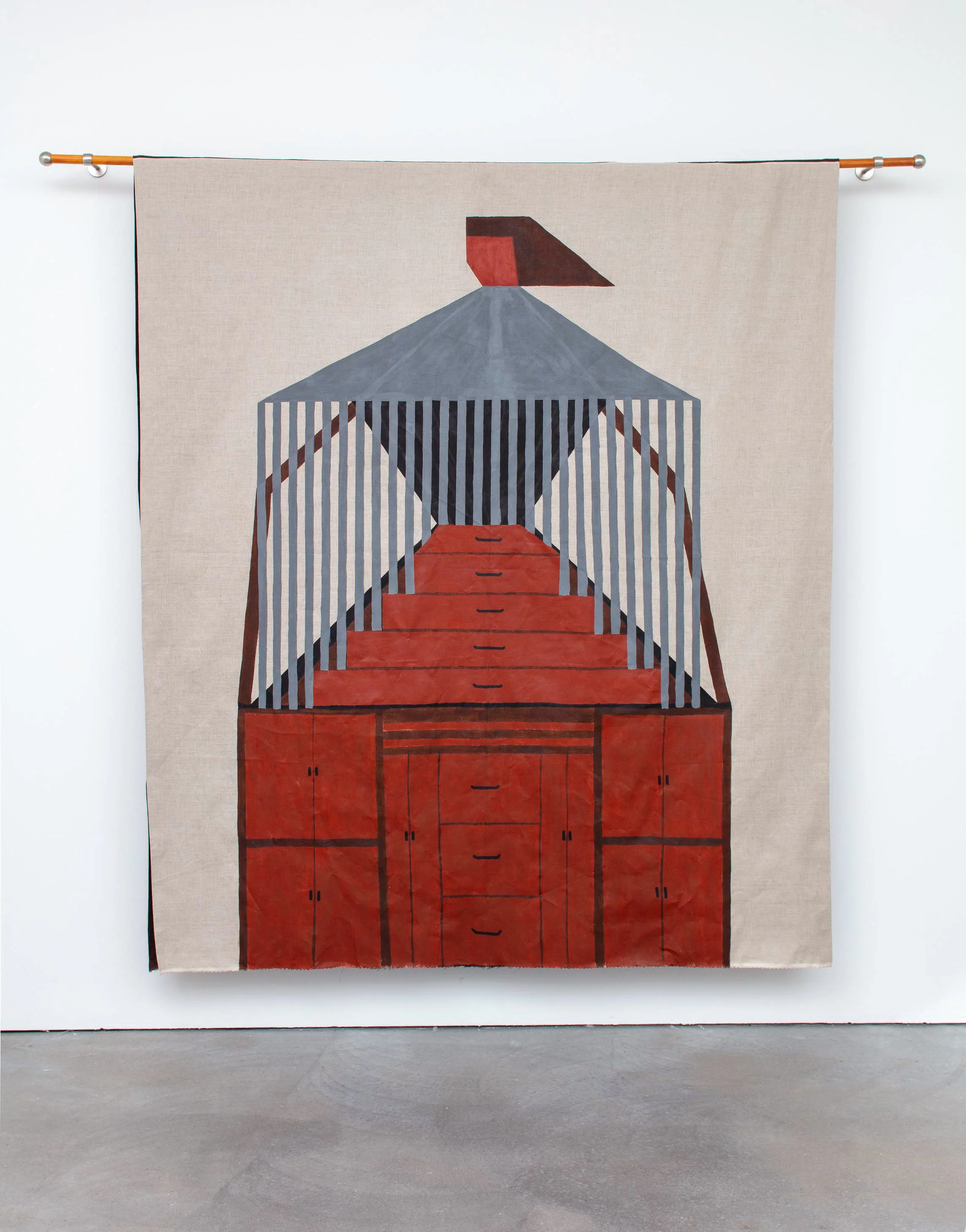
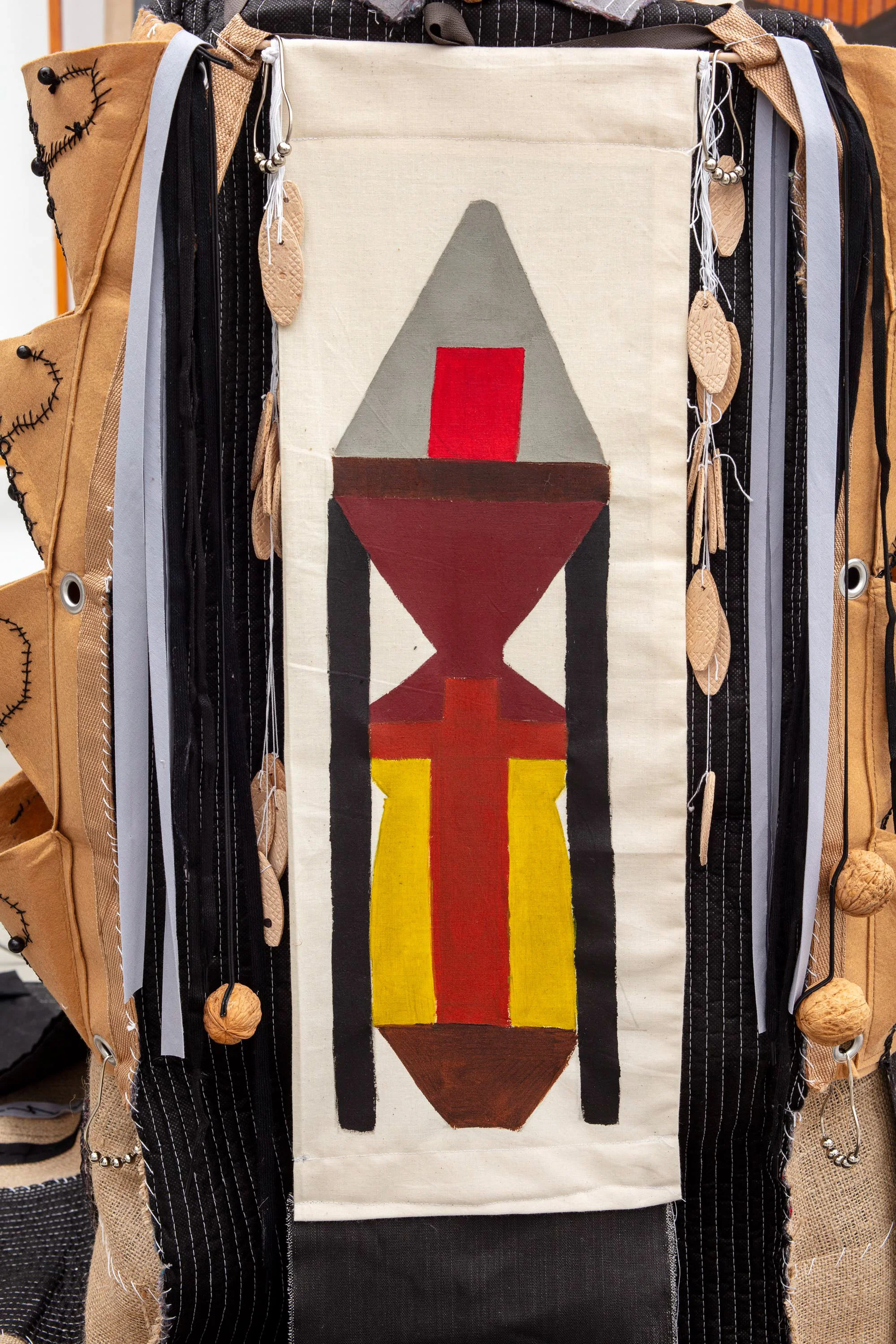
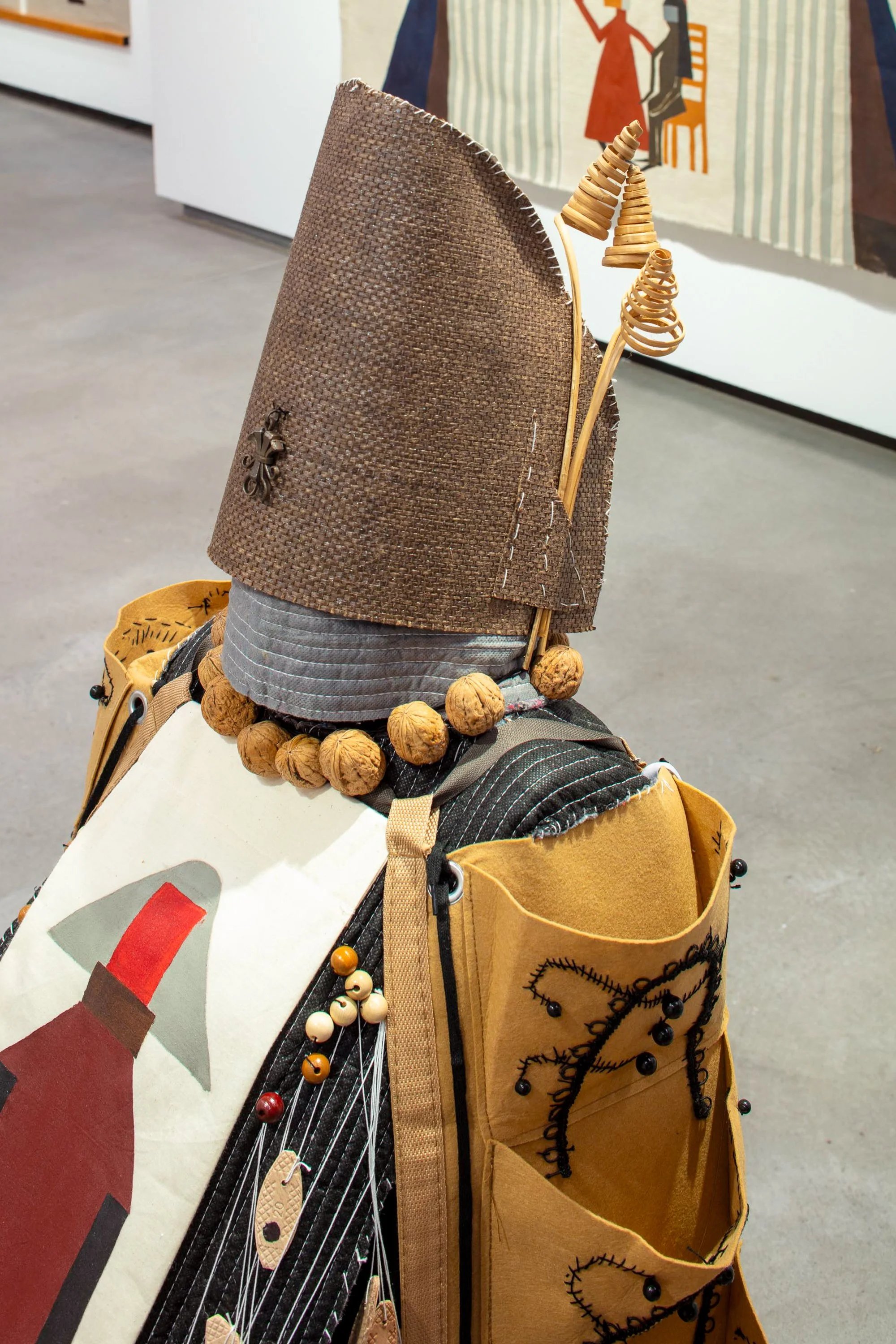
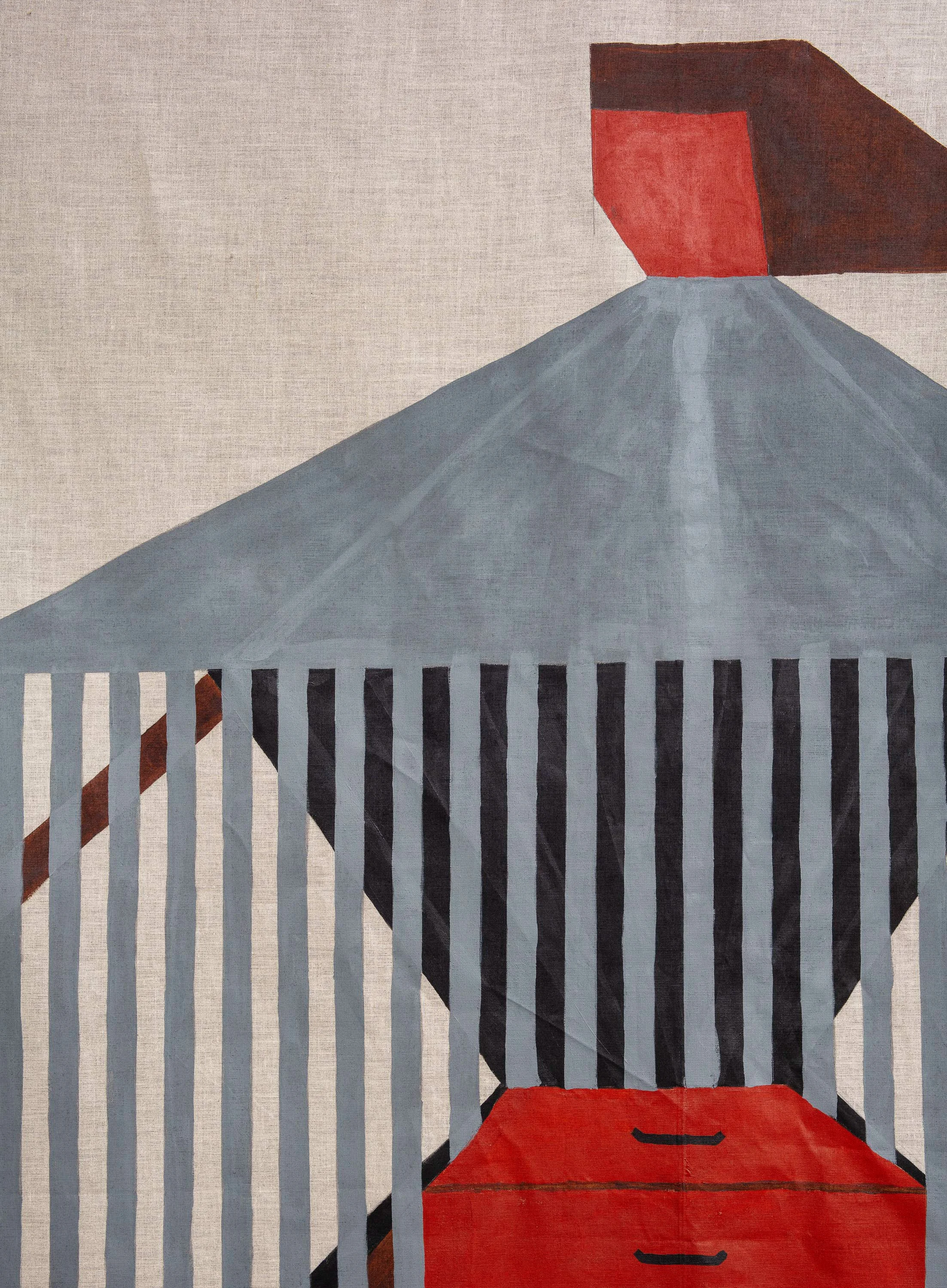
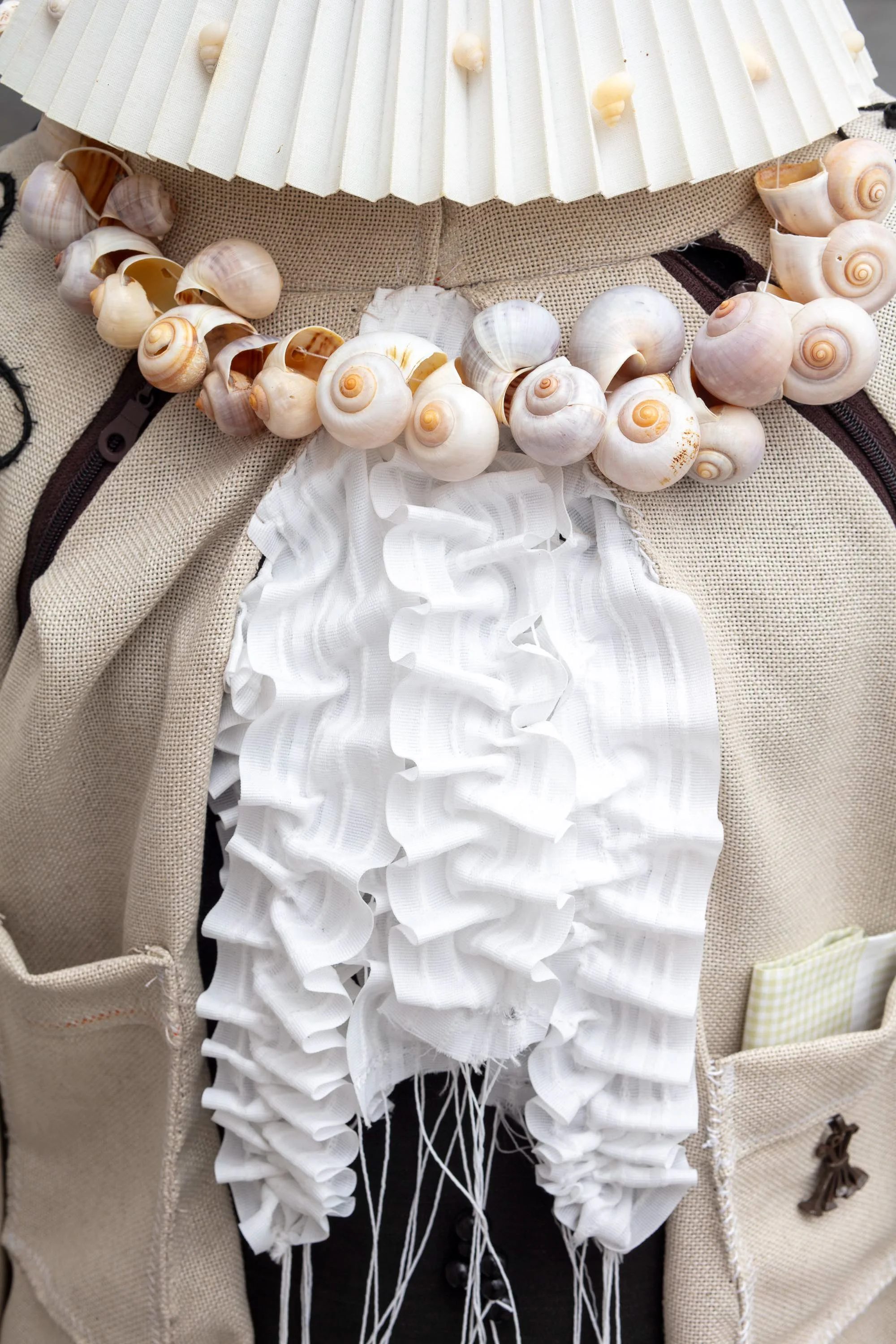
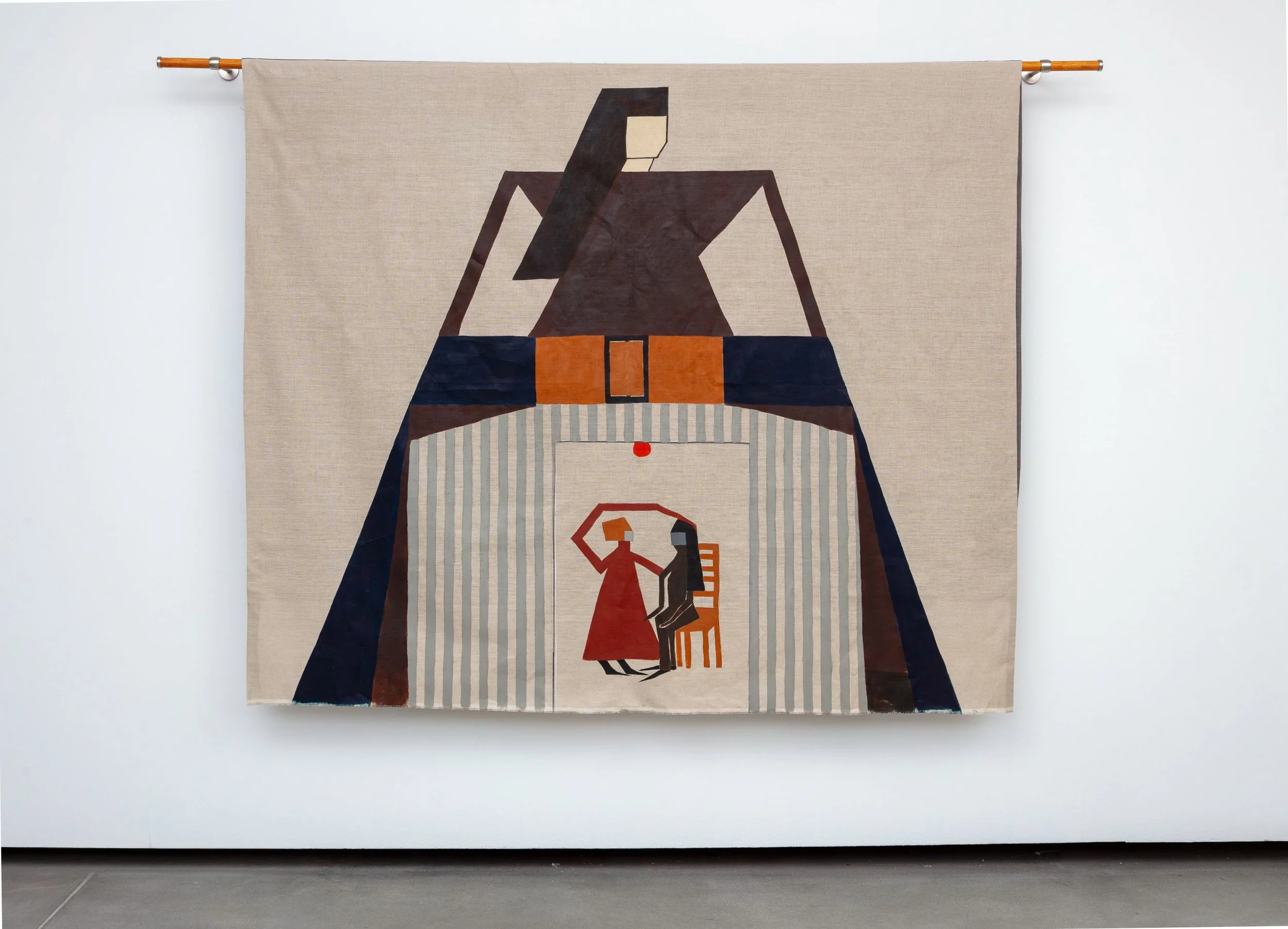
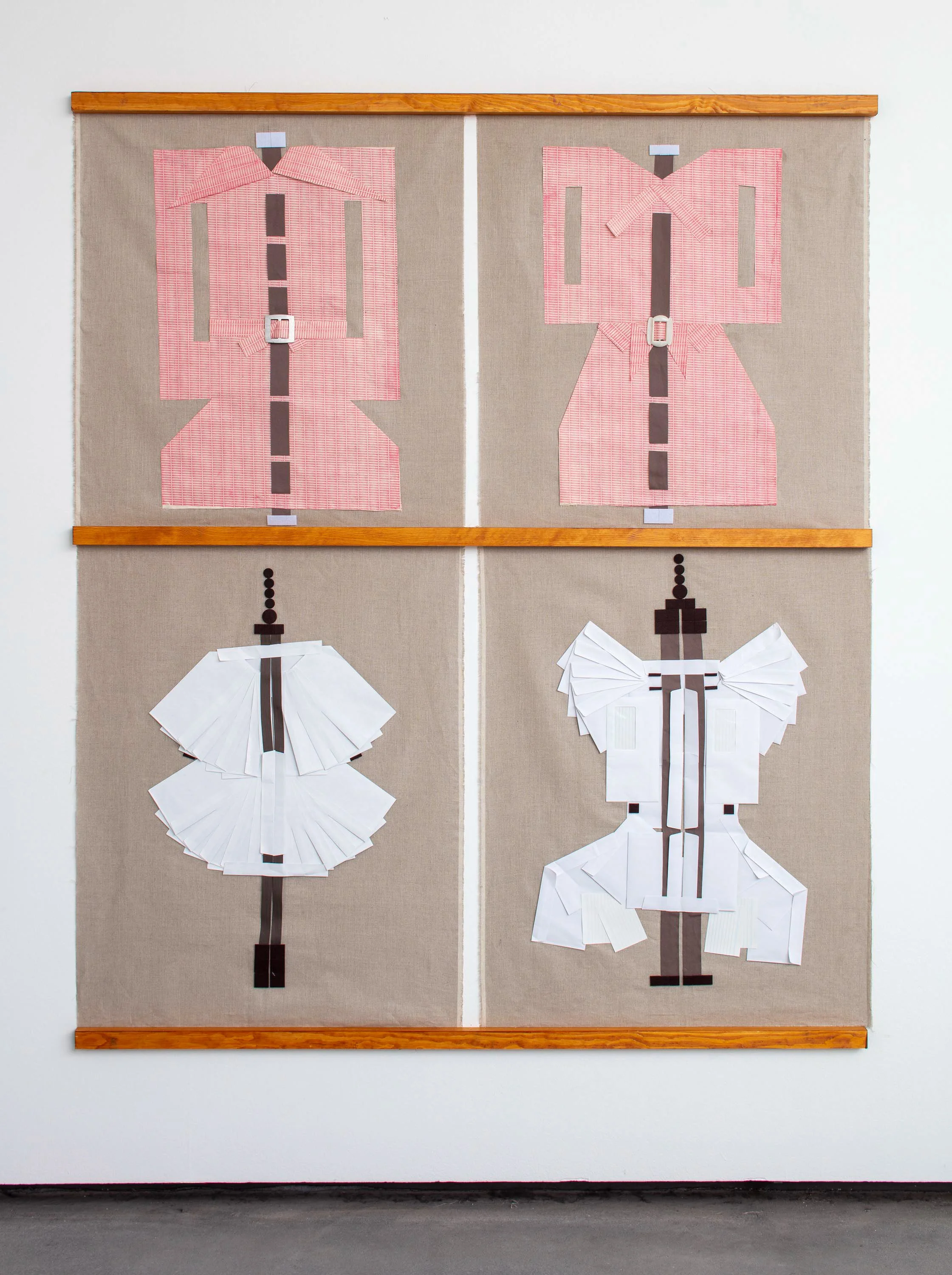
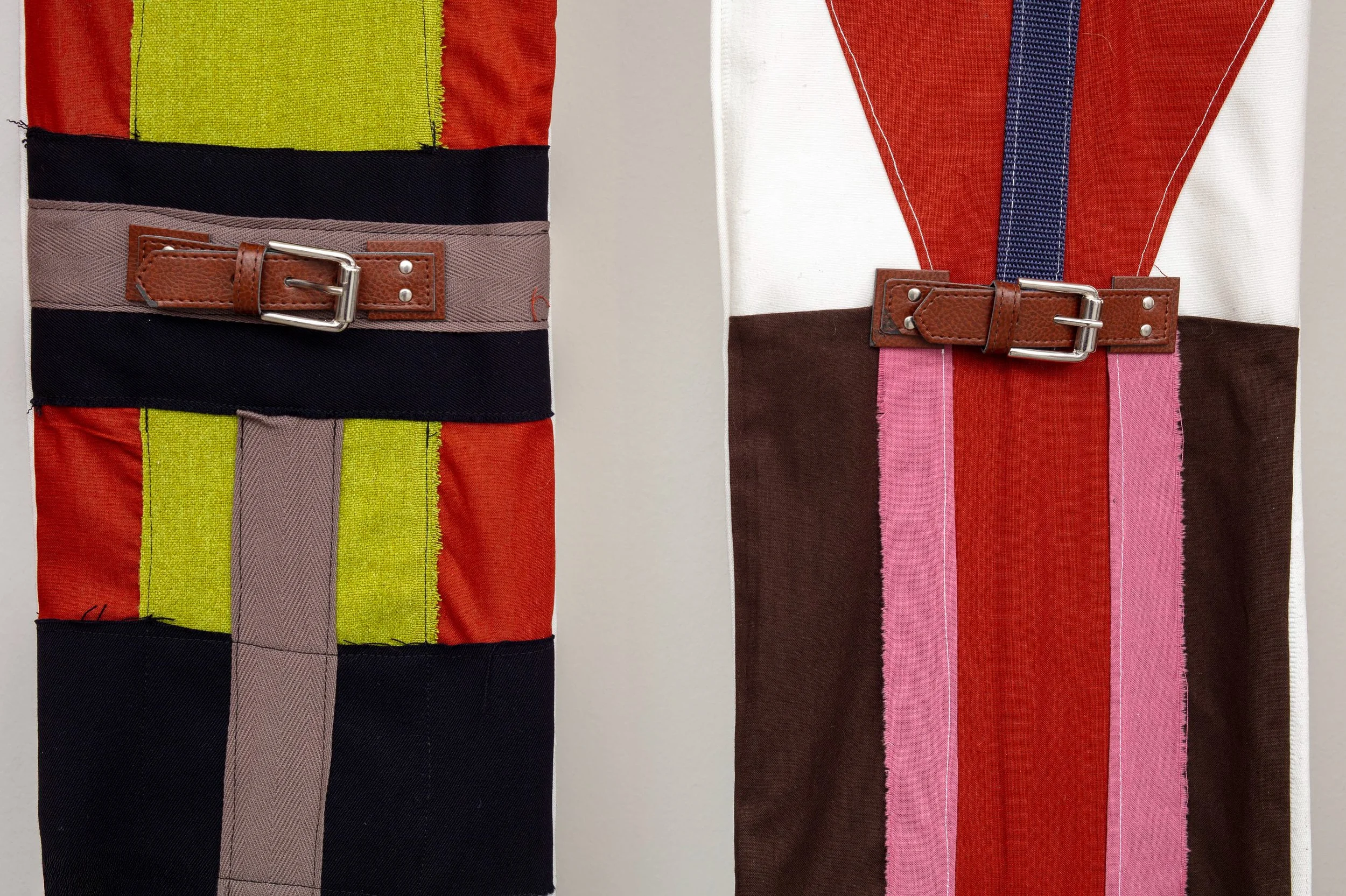
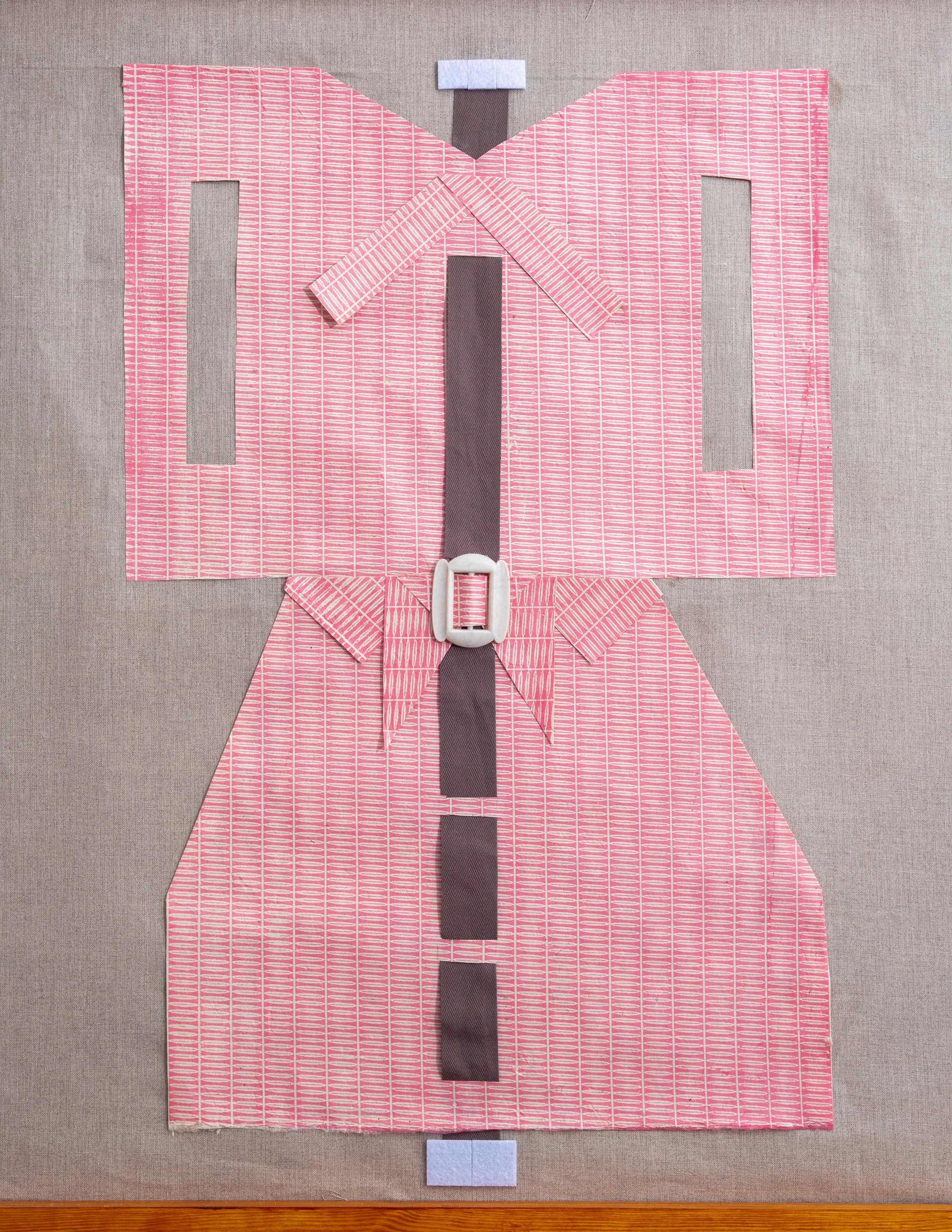
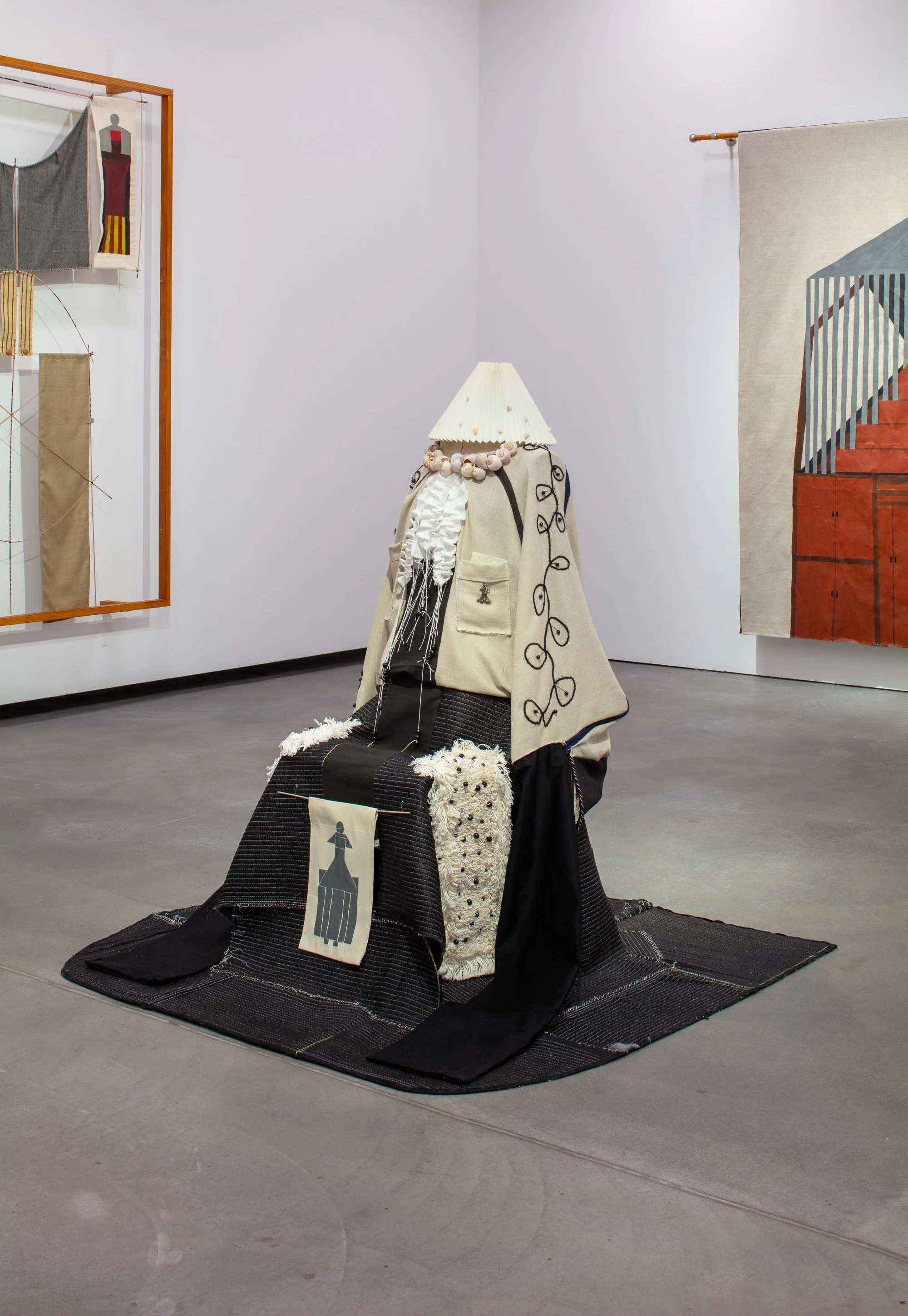
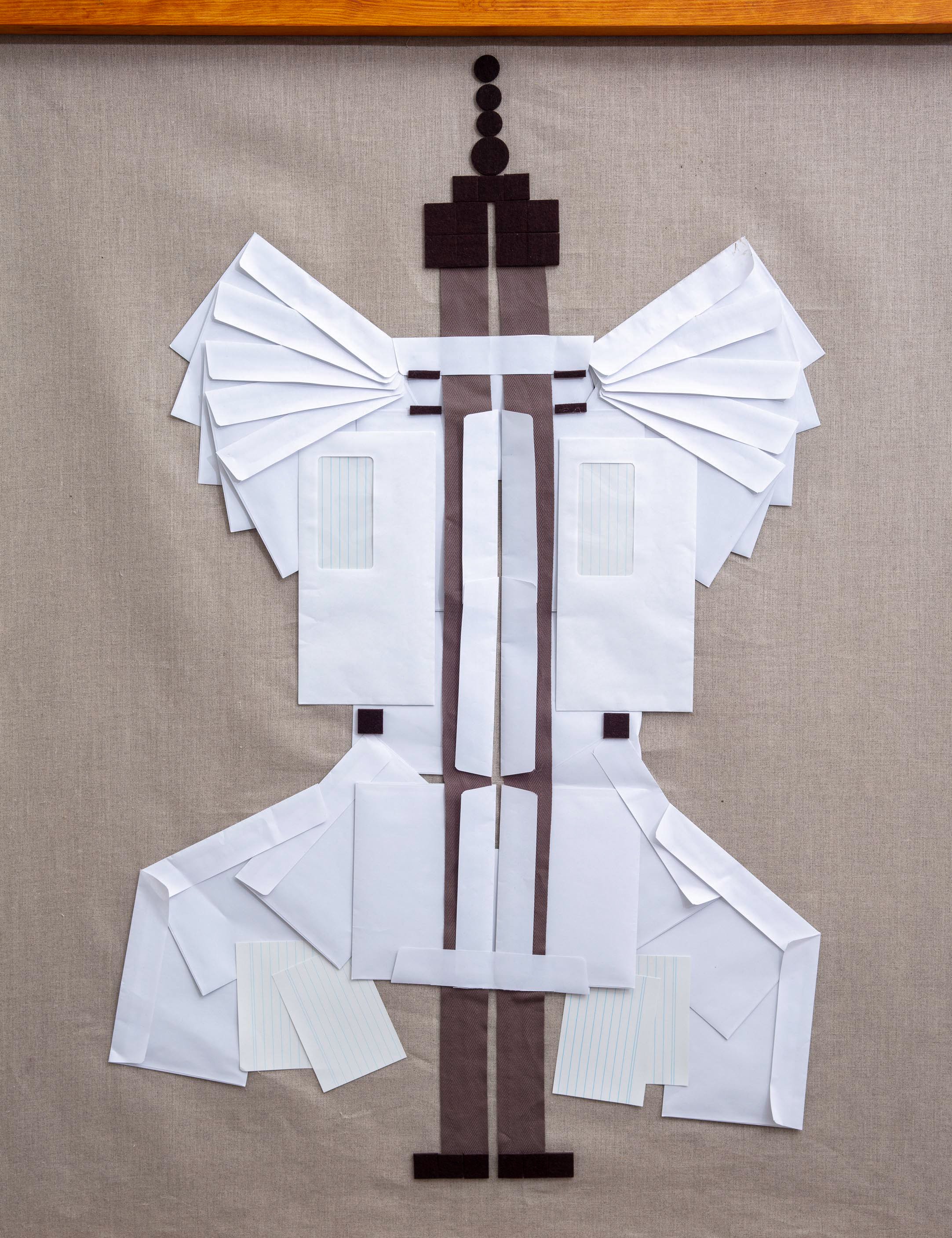
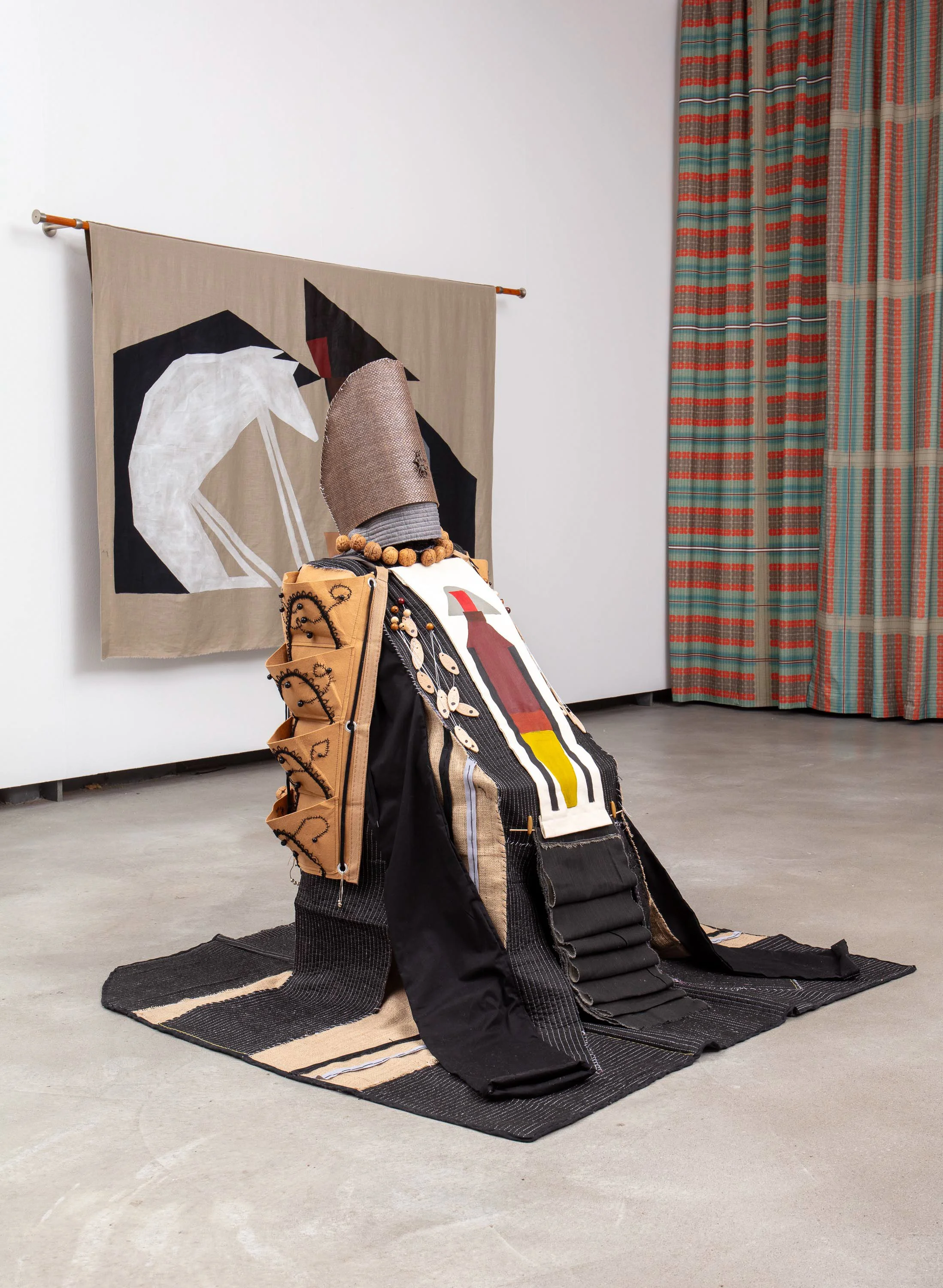
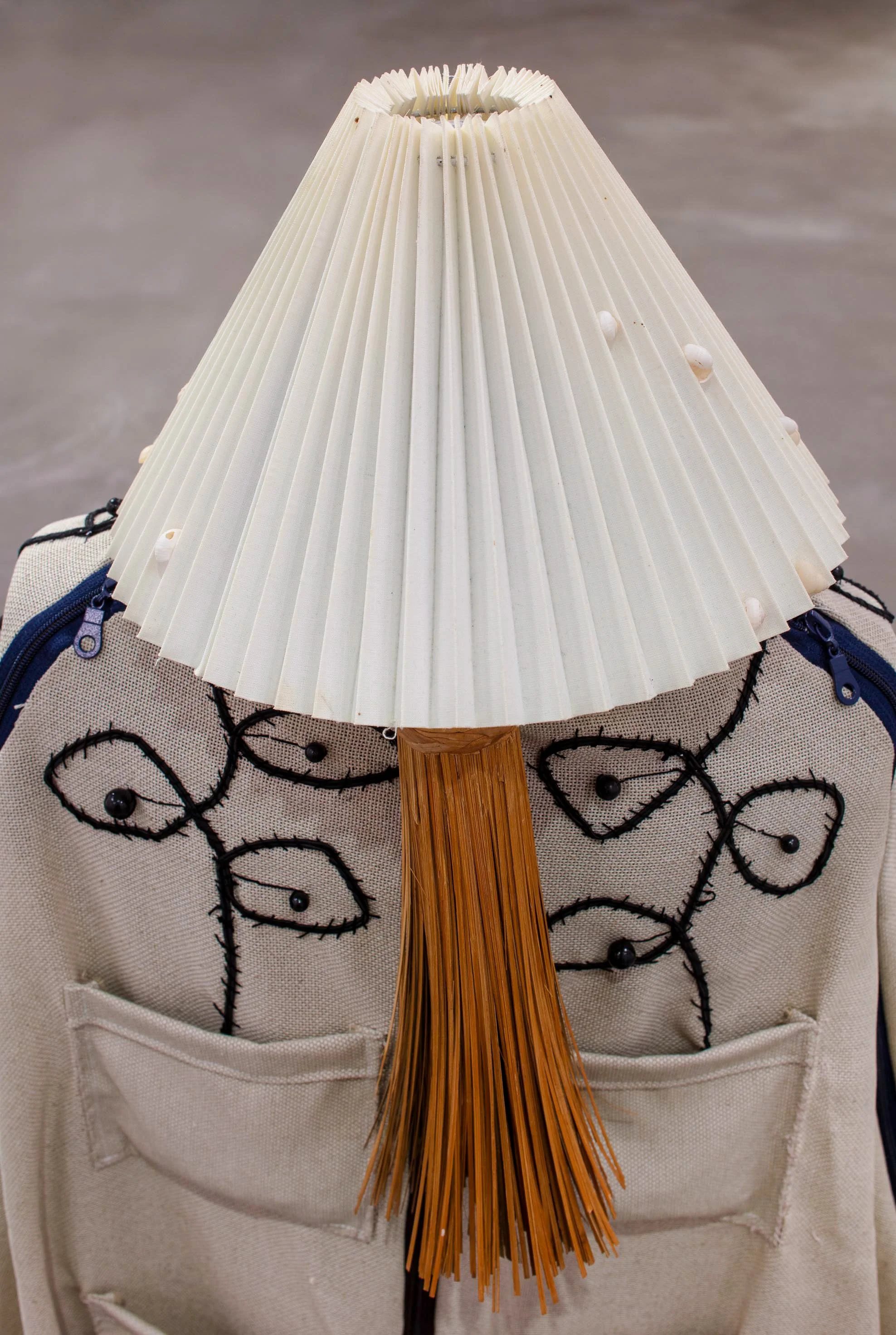
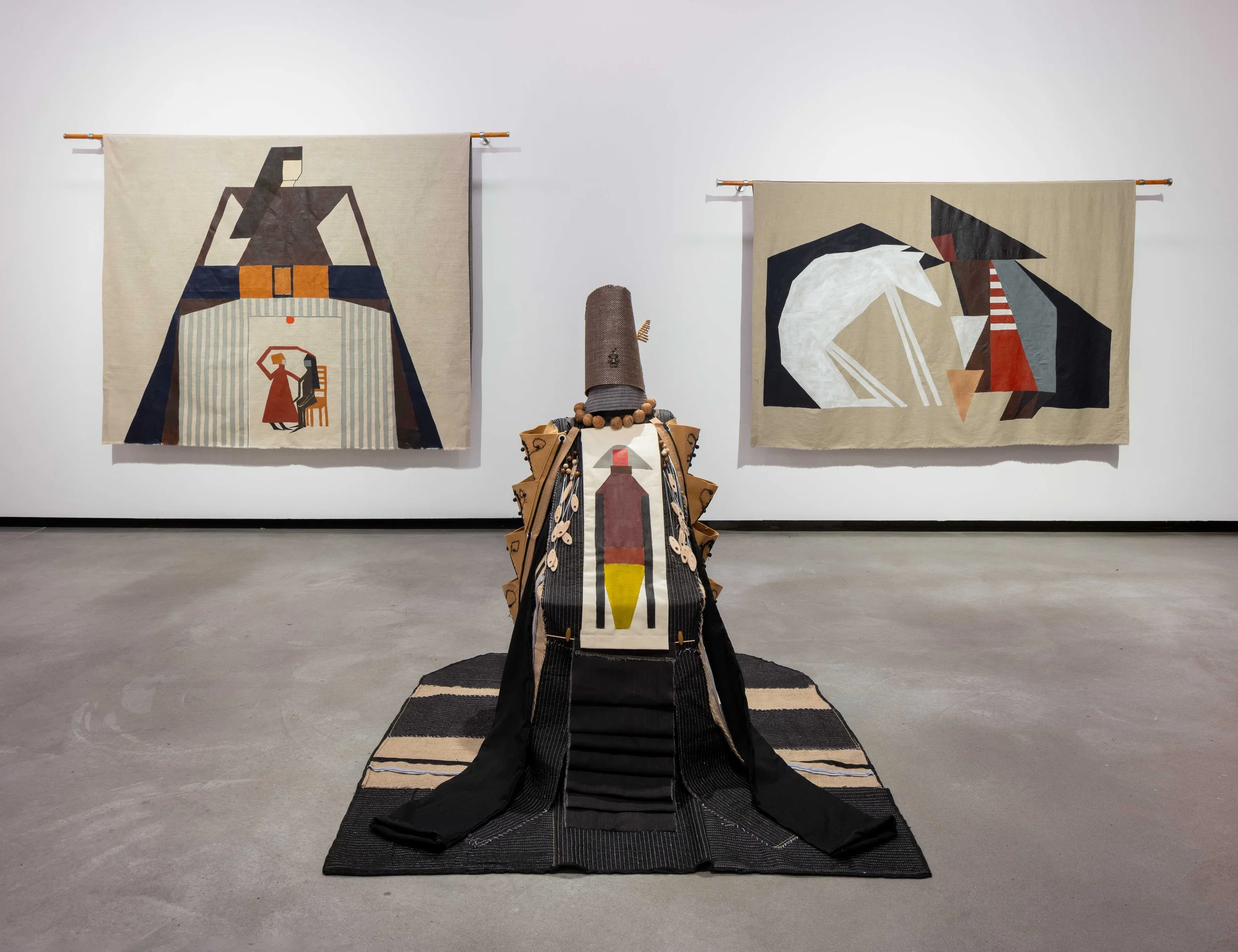
The dissolution of boundaries is also evident in other varieties of these androgynous beings, constructed from heterogeneous textile and painted “components”, which form an almost obsessively recurring motif. In works such as Under the Coat and Winding (both 2026), these textile elements take on a decidedly protective function. As varied as their constructions are, Ruti de Vries’s humanoid beings and textile objects nevertheless share an underlying aesthetic programme: they appear as archetypes of a lost mythological order, at the heart of which lies a communal and imaginatively open process of unlimited creativity. The quasi anthropological display of the series of works on the right and the beings in The Middleman and The Mediator (both 2026), positioned in the centre of the room – which can be read as both sculptural textile compositions and as shamanic presences – underline this dimension. A lexical interpretation inevitably reaches its limits here. Rather, visitors are invited to understand the relationships between the works, as well as those with the audience, as equal interactions that can be affectively experienced.